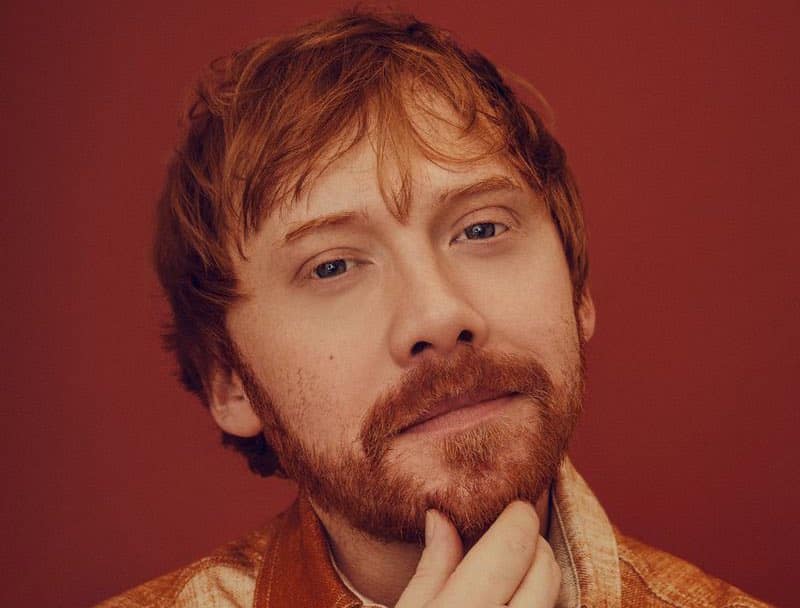
Rupert Grint Speaks Out on Rise of Fascism –

Rupert Grint Says He Is “Obviously Against It” in New Interview Comments
Rupert Grint Addresses Political Climate in Recent Remarks
February 15, 2026: Rupert Grint is drawing attention after speaking candidly about the global political climate and the rise of fascist rhetoric in a recent interview, making his personal stance clear with a direct statement: “Obviously, I’m against it.” The actor, best known for his long-running role in a major fantasy film franchise and his later television work, rarely steps deeply into political commentary, which is why the remark is gaining traction across entertainment news and social platforms.
His comments came during a broader discussion about current events, public discourse, and the responsibility public figures may feel when asked to respond to political themes. Rather than delivering a long political argument, Grint offered a concise personal position that quickly became the headline takeaway.
HOLR has the latest news on what he said, how audiences are reacting, and why more actors are being asked to weigh in on political topics during press interviews.

Image Credit: The Hollywood Reporter
A Rare Direct Political Statement
Grint has historically maintained a relatively low political profile compared with many of his peers. While he has supported charitable causes and social campaigns, he has not frequently made sharply worded public political statements. That made his straightforward response stand out.
When asked about the rise of fascist ideology and movements referenced in current global conversations, he answered plainly that he opposes it. Observers noted that his tone was measured and matter-of-fact rather than fiery or rhetorical.
Media analysts say that short, values-based statements like this are increasingly common among performers who want to express a moral stance without turning interviews into political debates.
Why Actors Are Being Asked More Political Questions
Entertainment press tours now often include broader cultural and political questions, even when projects are not explicitly political. Journalists and moderators frequently ask public figures to comment on social trends, governance concerns, and ideological movements.
Several factors are driving this shift:
- Celebrity platform reach
- Social media amplification
- Culture-politics overlap
- Audience interest in personal values
- Issue-driven storytelling in film and TV
Actors connected to stories involving power, conflict, or social systems are especially likely to receive these questions — even if their roles are fictional.
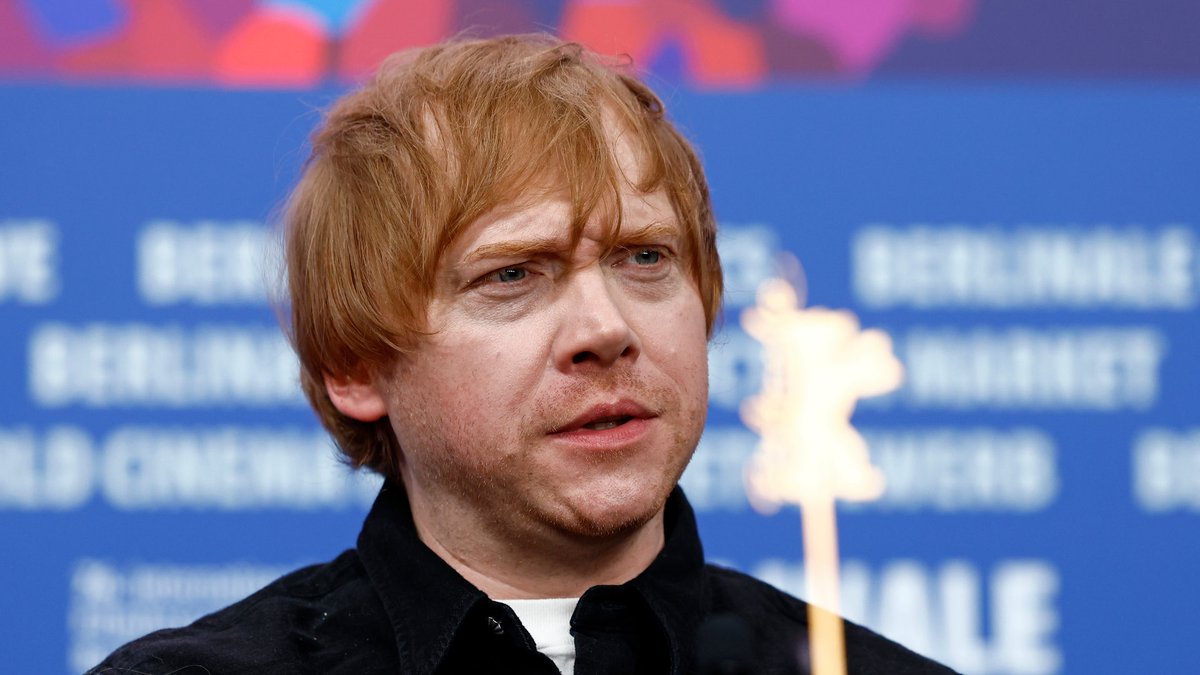
Image Credit: X
The Balance Between Privacy and Public Voice
Many performers today walk a careful line between personal belief and professional neutrality. Some choose outspoken advocacy, while others limit commentary to broad value statements. Grint’s response falls into the second category — a clear personal stance without extended political messaging.
Public relations experts say there are generally three approaches celebrities take:
- Active advocacy — frequent, detailed political engagement
- Values signaling — brief moral-position statements
- Non-engagement — declining political comment
Grint’s remarks align with values signaling — expressing opposition to an ideology without endorsing specific policies or parties.
Audience Reaction Has Been Mixed but Measured
Online response to Grint’s statement has been varied but relatively calm compared to more polarizing celebrity political comments. Many fans praised the clarity and simplicity of his stance, while others argued that entertainers should avoid political commentary altogether.
Common response themes include:
- Support for moral clarity
- Appreciation for brevity
- Calls for celebrity neutrality
- Debate over artist responsibility
- Discussion of fascism definitions
Because his statement was short and non-partisan in structure, reaction has focused more on principle than party politics.

Image Credit: The Hollywood Reporter
Entertainment Figures and Historical Themes
Film and television frequently explore themes related to authoritarianism, extremism, and civil resistance. As a result, actors are often asked how those themes relate to real-world developments. Even when not promoting a political project, performers may be drawn into these conversations due to cultural timing.
Industry commentators note that audiences increasingly look to artists not just for entertainment, but for ethical positioning — a trend accelerated by social media access and direct fan interaction channels.
That expectation creates new pressure points during press cycles.
A Career Still Evolving
Grint continues to build a post-franchise career through television, independent film, and dark comedy projects. His recent work has leaned more experimental and genre-driven compared to his early blockbuster years. Colleagues frequently describe him as selective and private, which further explains why any direct political remark becomes more newsworthy.
His interview presence is typically understated, often focusing on craft, character psychology, and production experience rather than ideology.
This contrast — private persona plus public values statement — contributed to the moment’s visibility.
The Broader Cultural Conversation
Discussion around fascism and authoritarian movements has increased globally in recent years, appearing more often in academic, media, and policy conversations. When public figures reference the topic, even briefly, it tends to generate headlines because it connects entertainment voices with civic discourse.
Experts caution that the term carries complex historical and political meaning, and public conversations often vary widely in interpretation. Short celebrity comments typically reflect personal moral positioning rather than technical political analysis.
Image Credit: Imdb
Short Statement, Long Echo
Though only a few words long, Grint’s statement traveled quickly across entertainment news feeds, demonstrating how even concise remarks from well-known figures can shape public conversation cycles.
In the current media environment, clarity plus recognizability often equals amplification.
Whether he expands on the topic in future interviews remains to be seen, but for now, his position is clearly on record — brief, direct, and values-based.
FAQs
What did Rupert Grint say about fascism?
He stated clearly, “Obviously, I’m against it,” when asked about the rise of fascist ideology.
Does Rupert Grint often speak about politics?
No. He generally maintains a low political profile and rarely makes direct political statements.
Why was he asked this question?
Actors are increasingly asked about major social and political themes during interviews and press tours.
How have fans reacted?
Reactions are mixed but measured, with many supporting the clarity and others preferring celebrity neutrality.
Was he endorsing a political party?
No. His comment expressed a general moral stance, not party or policy support.