Lindsey Vonn Crash Video 2026 and Racing Against the Body

Under the bright late-morning sun in Cortina d’Ampezzo, Lindsey Vonn stood in the start gate carrying more than just skis and poles. She carried a body pushed far beyond conventional limits, a career shaped by risk, and a belief that had refused to fade even when logic insisted it should. At 41 years old, with a fully ruptured anterior cruciate ligament in her left knee and a heavy brace strapped tightly around the joint, Vonn was acutely aware of what she was racing with and what she was racing against.
There had always been a version of this comeback story that ended in a single, violent instant. On Sunday, that version arrived quickly.
Video of Lindsey Vonn’s accident while attempting a jump
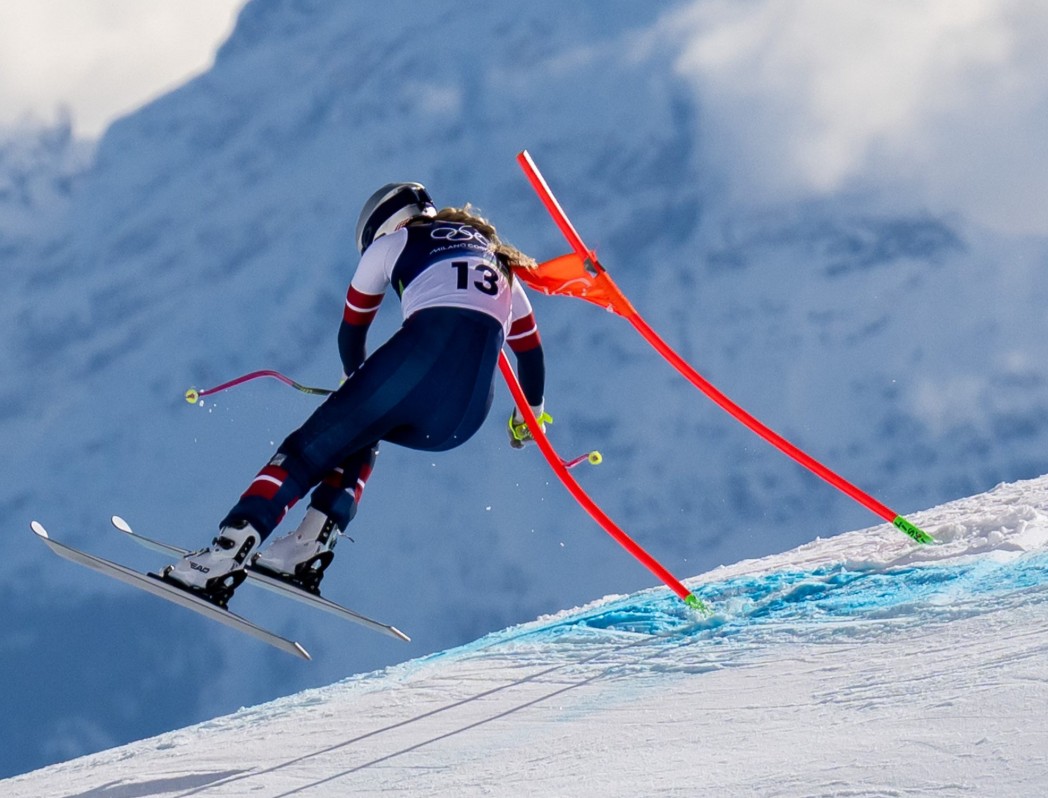
Vonn was the 13th skier to push out of the gate on the iconic Olimpia delle Tofane course, one of the most demanding downhill tracks in alpine skiing. The margins here are brutally thin. At full speed, balance is provisional, control is fleeting, and the line between mastery and disaster can disappear in a fraction of a second. Vonn barely made it through the opening phase of her run.
Not even 13 seconds into her descent, she appeared to clip her right pole on a gate. The contact was subtle, almost imperceptible at race speed, but devastating in its consequences. Her balance was compromised instantly. She lurched violently to the right, twisted awkwardly in midair, and landed hard on her side before being pitched backward down the piste. The crash unfolded with the grim inevitability that defines downhill skiing at its most unforgiving.
On the live television broadcast, Vonn’s screams cut through the ambient noise of the course microphones. The sound carried across the slope and into the finish area, where thousands of spectators gathered at the Tofane Alpine Centre fell into stunned silence. The joy and tension that normally animate a World Cup downhill dissolved into shock.
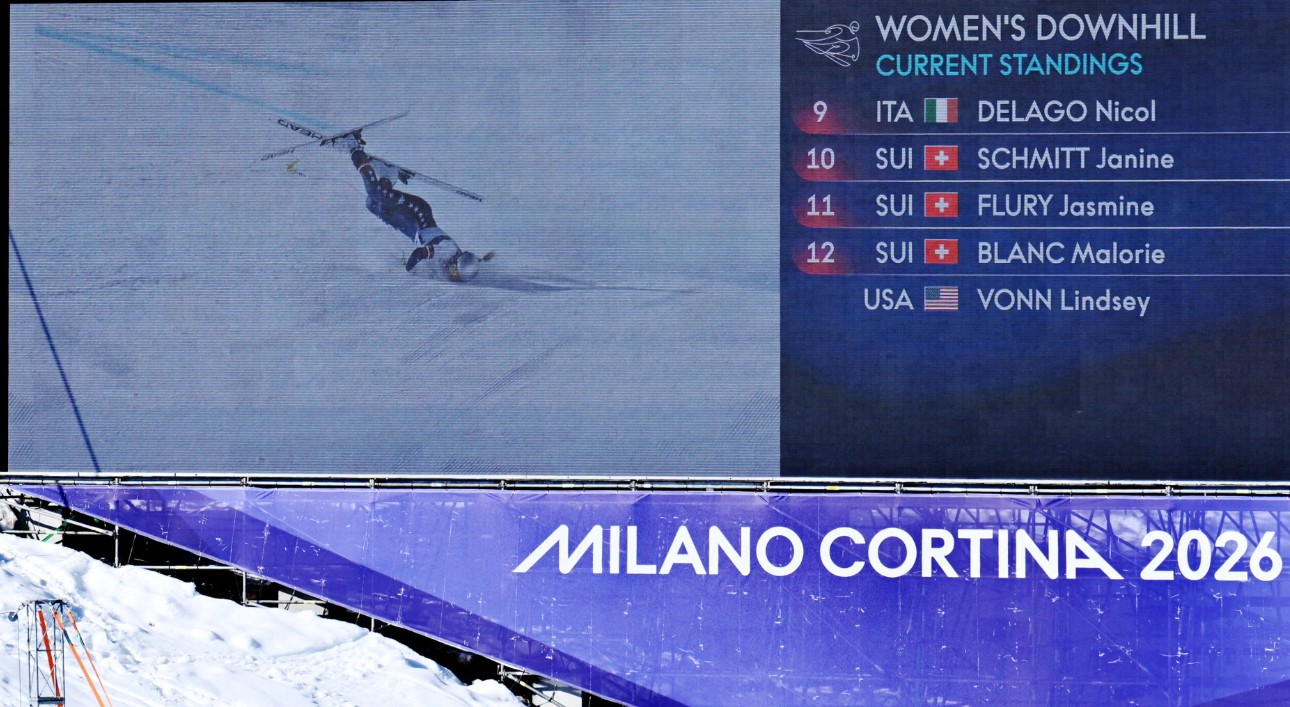
Teammates watching from the finish froze as the images replayed on the giant screen. Breezy Johnson, the reigning world champion who had just posted the fastest time edging Germany’s Emma Aicher by 0.04 seconds covered her eyes and turned away. Nearby, Vonn’s sister stood motionless, her face drained of color, watching helplessly as medical staff rushed toward the fallen skier.
Within seconds, race officials halted the competition. Medics reached Vonn as she lay on the course, clearly in distress. The minutes that followed stretched uncomfortably long. As doctors stabilized her and prepared her for evacuation, the crowd waited in uneasy quiet. A helicopter was eventually summoned the second time in just nine days that Vonn had been airlifted from a racecourse, following another crash in Crans-Montana, Switzerland, the week before.
Nearly half an hour passed before she was strapped into a stretcher and winched into the air. As the helicopter lifted away from the slope, the stunned silence finally broke into sustained applause. It was not a celebration, but an acknowledgment of courage, of pain, and of a career that had always demanded both.
Just like that, the Olympic downhill Lindsey Vonn had spent two years trying to reach and nearly six years believing she might never see again was over. Yet to frame the moment solely as the end of an Olympic dream would miss its deeper meaning. The truth is that this comeback was never meant to be judged by a finish position, a podium ceremony, or a medal count.
Vonn did not return to Cortina chasing a storybook ending. If anything, she spent the past year actively dismantling the idea that her comeback needed to conform to the tidy narratives preferred by broadcasters, sponsors, and headlines. She resisted the notion that success must be measured in medals or validation from the standings. Instead, she reframed the effort in simpler, harsher terms: showing up, pushing out of the gate, and trying even when the odds suggested she probably should not.
Those odds were considerable. Age is unforgiving in alpine skiing, particularly in downhill, where reaction time, strength, and joint integrity are relentlessly tested. Vonn’s physical résumé alone would have discouraged most athletes from even considering a return. A ruptured ACL, a titanium knee, chronic pain, and the accumulated damage of two decades spent racing at the edge of control formed a reality no amount of nostalgia could erase.
Yet belief does not always operate on logic. Before the race, Vonn spoke plainly about her situation. “The odds are stacked against me with my age, no ACL, and a titanium knee,” she said. “But I still believe.” The statement was not defiant in the traditional sense. It was matter-of-fact, almost sober. She was not promising victory. She was acknowledging risk and choosing to accept it.
That belief was never really about winning. It was about identity. Over more than twenty years on the World Cup circuit, Vonn had built herself into one of the most fearless competitors the sport has ever seen. Speed was not just her strength; it was her language. To walk away entirely would have meant surrendering a core part of who she was, not just as an athlete, but as a person shaped by consequence.
The Cortina crash underscored the brutal honesty of downhill skiing. There is no safe version of it, no sentimental exception for legends or comebacks. Every racer, regardless of age or reputation, is subject to the same physics. The mountain does not negotiate. It only responds.
And yet, within that harsh reality, there is something undeniably human about what Vonn attempted. She knew how this could end. She had already lived through crashes, surgeries, retirements, and doubt. She had already been told by doctors, by critics, by time itself that her best chapters were behind her. Still, she returned to the start gate.
In that sense, the meaning of her comeback was never going to be found at the finish line. It was found in the act of participation itself. In refusing to quietly disappear. In proving that the version of herself forged through years of speed, fear, and resilience still existed somewhere inside a body that, by any reasonable sporting standard, had already given enough.
The crash at Cortina was not a failure of belief. It was the inevitable risk of honoring it. Lindsey Vonn did not leave the mountain with a medal or a result to celebrate. She left with something harder to define, but no less significant: proof that belief, even when it ends in pain, can still be a form of victory.
News –