Trump Obama Ape Monkey Video and the Truth Social on Trump Racist

US President Donald Trump has removed a controversial social media video from his Truth Social account after it sparked widespread outrage for including a racist clip depicting former President Barack Obama and former First Lady Michelle Obama as apes. The video, which also contained debunked claims about voter fraud in the 2020 presidential election, drew condemnation from civil rights groups, Democrats, and members of Trump’s own Republican Party, reigniting long-standing debates about racism, misinformation, and the power of social media in modern American politics.
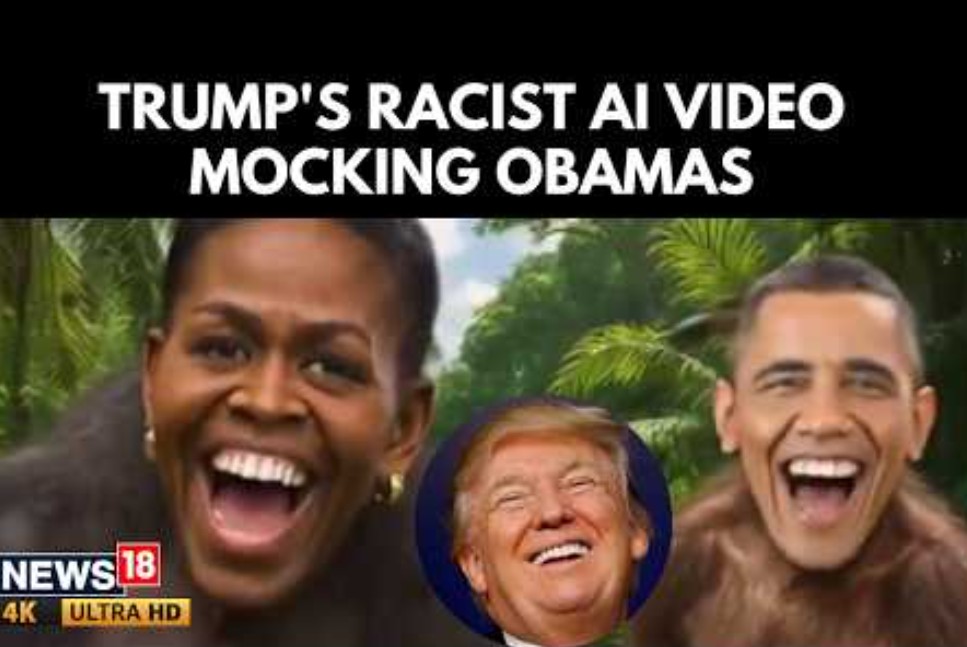
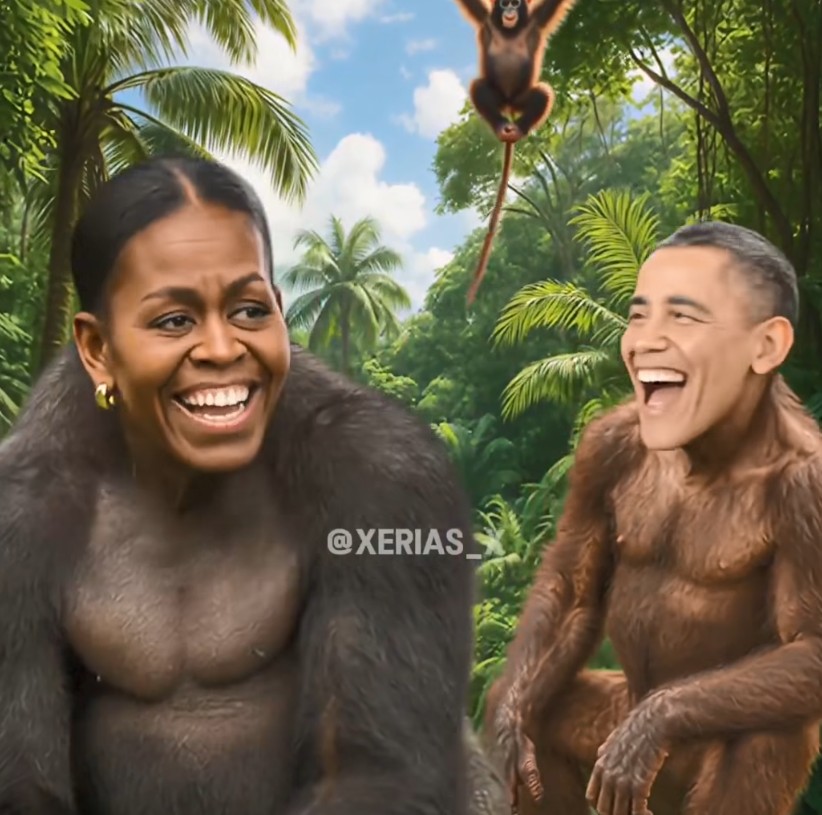
The now-deleted post was a 62-second compilation shared overnight among dozens of other posts by Trump. While much of the video focused on claims of election irregularities, its final seconds proved the most incendiary. Set to the song “The Lion Sleeps Tonight,” the clip portrayed the Obamas as apes, imagery that many immediately recognized as echoing some of the most offensive racist caricatures in American history.
The Video and Its Origins
The clip appears to have originated from an October post on X by a conservative meme creator known as Xerias. That original video portrayed several high-profile Democratic figures as animals, including New York Representative Alexandria Ocasio-Cortez, New York City Mayor Zohran Mamdani, and former Secretary of State Hillary Clinton. In the same montage, President Joe Biden was also depicted as an ape eating a banana.
Trump Obama Ape Monkey Viral Video on X
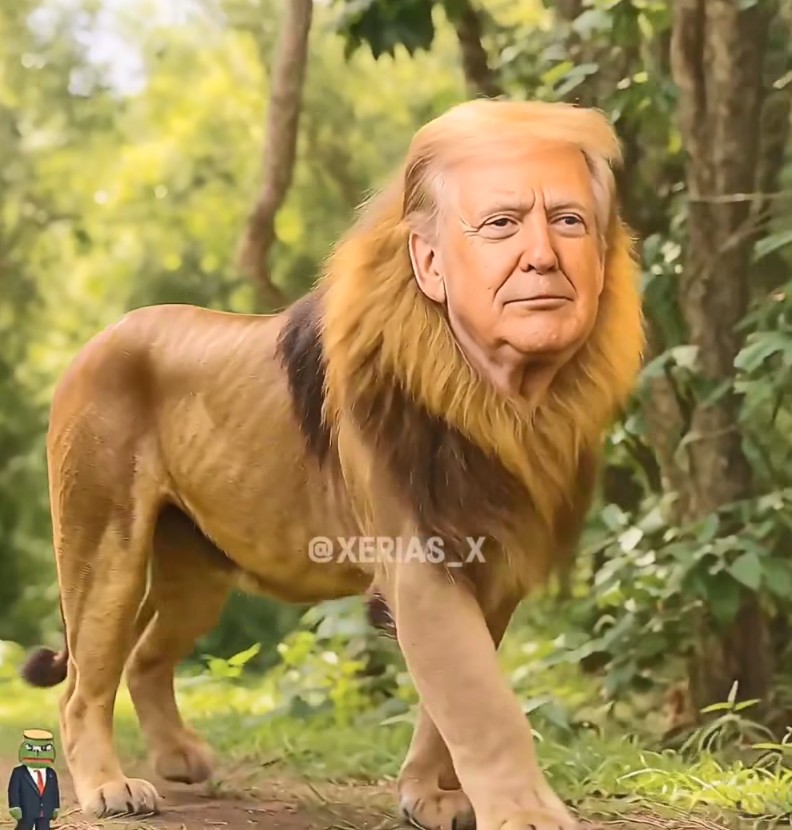
Although the meme attempted to frame Trump as the “King of the Jungle,” critics argued that this did little to excuse the deeply racist symbolism used against Black political figures, particularly the Obamas. Comparisons of Black people to monkeys or apes have long been used to dehumanize and demean, making the imagery especially inflammatory when shared by the sitting president of the United States.
Initial White House Defense
The White House initially responded by dismissing the criticism. In a statement sent earlier in the day, Press Secretary Karoline Leavitt described the clip as part of an “internet meme video depicting President Trump as the King of the Jungle and Democrats as characters from The Lion King.” She accused critics of manufacturing outrage and urged the media to “report on something today that actually matters to the American public.”
Rather than calming the controversy, the response intensified backlash, with critics accusing the administration of trivializing racism and failing to grasp the gravity of the imagery involved.
Backlash From Republicans and Democrats Alike
What made the incident particularly damaging was the swift and vocal criticism from within Trump’s own party. Senator Tim Scott of South Carolina, a Black Republican and a longtime Trump ally, publicly urged the president to take the video down.
“I’m praying it was fake because it’s the most racist thing I’ve seen out of this White House,” Scott wrote, adding that the president should remove the post immediately.
New York Representative Mike Lawler echoed those concerns, calling the video “wrong and incredibly offensive whether intentional or a mistake.” He said it should be deleted “immediately with an apology offered.” Even after the post was taken down, Republican Senator John Curtis of Utah condemned it as “blatantly racist and inexcusable,” criticizing the fact that it remained online for as long as it did.
Democrats and civil rights leaders were even more forceful. Derrick Johnson, president of the National Association for the Advancement of Colored People (NAACP), described the video as “disgusting and utterly despicable,” accusing Trump of using racist provocation to distract from other issues, including the Epstein case and what he called a “rapidly failing economy.”
Illinois Governor JB Pritzker bluntly stated that “Donald Trump is a racist,” while California Governor Gavin Newsom’s office wrote on X that the video represented “disgusting behaviour by the president” and demanded that “every single Republican must denounce this. Now.”
House Minority Leader Hakeem Jeffries, who has previously accused Trump of racism, labeled the president a “vile, unhinged and malignant bottom feeder,” urging Republicans to publicly condemn what he described as “disgusting bigotry.”
Removal and Damage Control
Amid mounting pressure, the video was eventually removed from Trump’s Truth Social account. A White House official later told reporters that the post had been shared “erroneously” by a staffer. According to CBS, Florida Representative Byron Donalds a Trump supporter currently running for governor contacted the White House after the post went live and was told that a staffer had “let the president down.”
The explanation raised further questions about oversight and accountability, particularly regarding who has access to the president’s social media accounts and what approval process exists for posting content. The BBC has contacted the White House seeking clarification on these issues.
The Obamas’ Silence
As of now, Barack and Michelle Obama have not publicly commented on the video. Their silence is consistent with how the former president has often responded to attacks in the past by declining to engage directly. Many supporters view this restraint as a deliberate strategy, allowing critics to speak out while avoiding further escalation.
The Weight of Racist Imagery
The backlash surrounding the video cannot be separated from the historical context of racist tropes in the United States. For centuries, caricatures comparing Black people to animals have been used to justify discrimination, violence, and exclusion. When such imagery resurfaces in modern political discourse particularly when amplified by a president it carries profound symbolic weight.
Critics argue that even if the video was framed as satire or a meme, its message cannot be divorced from this history. For many Americans, the incident reinforced concerns about racial division and the normalization of dehumanizing language in political culture.
A Pattern of Attacks on Obama
The controversy also revived memories of Trump’s long history of attacking Barack Obama. Before entering office himself, Trump was one of the most prominent promoters of the false “birther” conspiracy theory, which claimed that Obama was not born in the United States and was therefore ineligible to be president. Although Trump later acknowledged that Obama was born in Hawaii, the episode remains widely viewed as racially charged.
Many observers see the recent video as part of that broader pattern, rather than an isolated misstep.
Misinformation and the 2020 Election
Compounding the outrage was the fact that the racist clip appeared at the end of a video promoting claims about voter fraud in Michigan during the 2020 presidential election. Those allegations were thoroughly debunked and became central to Dominion Voting Systems’ successful defamation lawsuits against several media outlets.
By combining discredited conspiracy theories with offensive imagery, critics argue, the video exemplified the dangers of misinformation amplified through social media by powerful figures.
Political and Social Consequences
The long-term impact of the incident remains uncertain, but it has already intensified scrutiny of Trump’s rhetoric and digital strategy. Moderate Republicans and independent voters may view the episode as further evidence of divisiveness, while supporters may dismiss the backlash as overblown.
More broadly, the controversy highlights how meme culture, once confined to online subcultures, has become entangled with formal political power often with explosive results.
The removal of the video depicting the Obamas as apes marked the end of a brief but intense controversy, yet the questions it raised are likely to linger. At its core, the incident underscores the enduring tensions around race, accountability, and leadership in the United States. As social media continues to shape political communication, the episode serves as a stark reminder that words and images shared from the highest office in the land carry consequences far beyond the screen.
Daily Hot News –