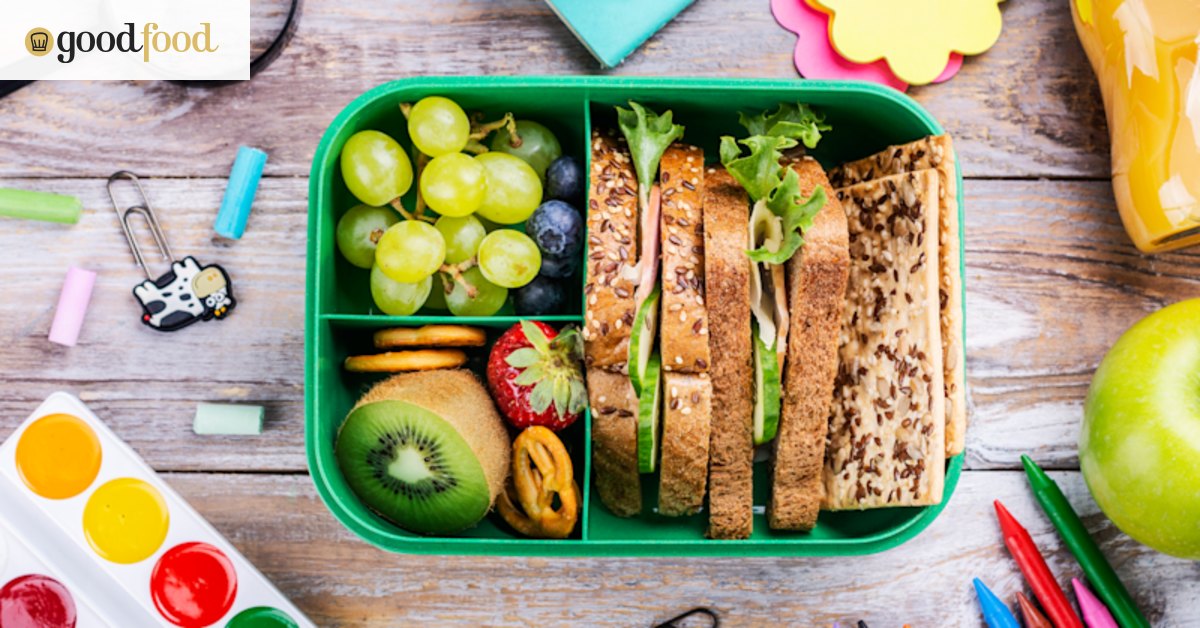
How to pack a healthy and safe school lunchbox

Things have changed a bit since the old plastic lunchbox with a Vegemite sandwich squashed into it. Here’s the latest expert advice. Plus: new lunchbox-friendly muffins your kids will love.

As back-to-school looms, the lunchbox spectre rises. From “instagrammable” to notorious red-light lunch letters, what do we actually need to worry about when it comes to feeding the kids?
Keep it chilled
With the school year kicking off in the heat of summer, keeping lunchboxes food-safe zones should be a top priority according to Dr Rozita Vaskoska, senior research scientist from the CSIRO — not aesthetics.
“There is a window of around four hours between when the school day starts and lunch,” says the microbiologist. “That’s the time we consider potentially hazardous foods to be safely kept in the danger-zone [between 5-60 degrees Celsius].”
For foods to remain safe in that four-hour window on a hot day, the senior scientist says insulated bags, ice packs, gels and frozen drinks are a practical way to manage temperature. After that four-hour window, potentially hazardous foods should be discarded, not repacked or snacked on.
The best recipes from Australia’s leading chefs straight to your inbox.
Sign up
If you can’t keep it chilled, foods to avoid at the hottest time of year include: cold or cooked meats, high-moisture dairy products like soft cheeses, mayonnaise-based dressings and cut melons.
On the flip-side, hot foods – where age appropriate – also need to stay hot (60 degrees plus) to be safe, or they should also be discarded after that four-hour window.
Top tips
- Use a thermal bag chilled with a cold pack.
- If you can’t chill it, discard potentially hazardous foods after four hours.
- Keep hot foods above 60 degrees with a Thermos.
Fresh is best
According to 2025 research from Deakin University, primary school-aged children in Victoria get almost half their daily kilojoule intake (47 per cent) from ultra-processed foods.
“Ultra-processed basically means a really long shelf-life. It doesn’t always mean junk food,” says clinical nutritionist Amelia Phillips. “There are lots of healthy-sounding ultra-processed foods with a two-year expiry on them.”
That’s a lot of processing to make them shelf stable, typically reducing nutritional value.
‘You don’t need an Instagram-worthy lunchbox and don’t worry when they don’t eat everything … near enough is good enough.’
Clinical nutritionist Amelia Phillips
For Phillips, the message isn’t about making everything from scratch, it’s about better choices. Fresh is best, but when it comes to convenience items, a shorter expiry is better. Opt for a two-week shelf-life over a two-year shelf-life.
“You don’t need an Instagram-worthy lunchbox and don’t worry when they don’t eat everything,” says Phillips. “There’s breakfast and dinner, and near enough is good enough. Offer plenty of fresh foods and if they eat some, they’ll be fine.”
Phillips also recommends ‘levelling up’ and ‘fun cues’. Levelling-up is choosing foods that your kids already love and making minor, healthier tweaks, without changing everything at once —swapping white bread for high-fibre, or adding cheese to a Vegemite sandwich.
“Leftovers are gold”, says Phillips. From bolognese to stir-fry, packed safely, kids are more likely to eat what they already love. “It saves time and money, too.”
Fun cues make foods approachable, without extra work for parents. It could be giving foods cute names, adding faces, or cutting it up and adding a fun toothpick. Nutritionally sound choices, dressed with a little fun.
Top tips
- Choose items with shorter shelf-life to avoid ultra-processed foods.
- Use leftovers and favourite foods, nothing new in the lunchbox.
- Make little, healthy changes to “level-up”, adding “fun cues” to make it approachable.
Keep it low-tox and sustainable (beyond plastic)
When moving away from plastic lunchboxes, beware — not all steel, silicone or low-tox alternatives are equal.
With metal, “watch out for cheap lunchboxes with unknown steel grades and plastic components that can’t be replaced,” says founder of Seed & Sprout, Sophie Kovic. “You’re looking for uncoated or powder coated 304 or 18/8 grade stainless steel.”
When it comes to silicone, “look for food grade, FDA or LFGB certified silicone only,” says Kovic. “And watch out for soft, flimsy silicone which can degrade, strong chemical smells and ‘silicone blends’ made with fillers or plastic.” She also recommends checking that seals are removable for easy cleaning and to avoid trapped moisture.
“Sustainability isn’t just about the material – it’s about how long the product lasts. The most sustainable lunchware is the one you don’t have to replace every year.”
Top tips
- Look for food grade, certified stainless steel and silicone.
- Check for removable seals for hygiene purposes.
- Seek out durable items.
Jane de Graaff’s miso polenta ‘ramen-inspired’ muffins
These were inspired by my 11-year-old’s love of ramen soups with a miso base, lots of corn, egg and pork pieces. You’ll find the same ingredients here, but in a muffin and minus the noodles. It’s a great snack and works really well in a lunchbox.
INGREDIENTS
- 1 cup quick cook polenta
- ½ cup plain flour
- 3 tsp baking powder
- 150g bacon style bits, crisped and cooled
- 4 spring onions, finely sliced
- 1 cup tinned corn, drained (or ½ cup corn and ½ cup edamame beans)
- 1 cup greek yoghurt
- 2 eggs
- 2 tbsp of your favourite miso paste
- ¼ cup rice bran oil – or other neutral flavoured oil
- Furikake rice seasoning, for topping
METHOD
- Preheat the oven to 180C and grease and line 3 x 6 hole cupcake/muffin trays (or do multiple batches), and make sure your bacon bits have been cooked and cooled.
- In a jug or small bowl whisk together the yoghurt, eggs, miso paste and oil and set aside.
- Place polenta, flour and baking powder into a large mixing bowl and stir thoroughly.
- Add the cooked and cooled bacon bits, spring onion and drained corn and edamame (if using) and mix well.
- Make a well in the centre of the dry ingredients and add the wet mixture, mixing it lightly to just combine — avoid over mixing, you want to just bring it together.
- Divide the mix evenly into the muffin trays, sprinkle over the furikake and bake for 25 minutes or until firm. Allow to cool.
Makes 18 muffins
Note: These will keep for up to five days in an airtight container in the fridge and can be eaten cold or re-heated.
Tip: You can even whip together unsalted butter with miso paste to make a whipped miso butter to serve with the muffins.
 Jane de Graaff is a food writer and recipe developer who regularly demonstrates fun food on Nine’s Today Show.Connect via X.
From our partners