Brisbane-Gold Coast drive will blow out up to 2.5 hours


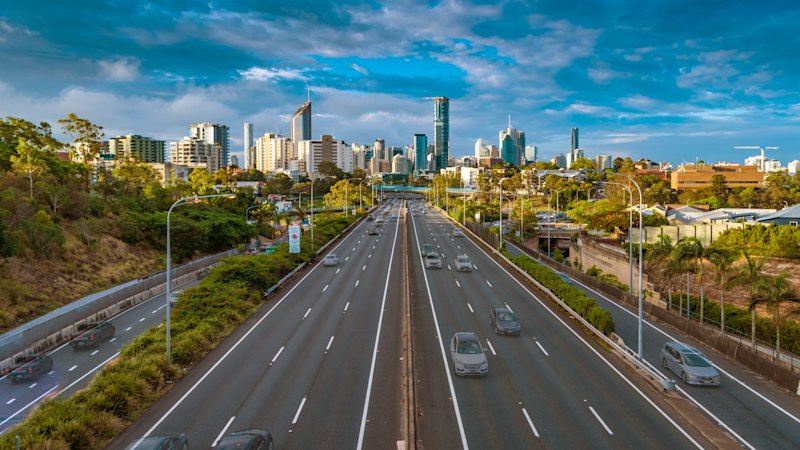
Motorists will face a commute of up to 2.5 hours between Brisbane and the Gold Coast in the next two decades, as up to 30,000 extra cars clog the Pacific Motorway each day.
Data released exclusively to Brisbane Times can reveal Transport and Main Roads’ forecasts of congestion blow-outs and soaring traffic on the motorways to the Gold Coast, Sunshine Coast and Ipswich by 2046.
However, the modelling does not factor in “future congestion-easing projects” yet to be planned, a department spokesman said, adding the upper end of the 2046 forecasts was “indicative” as scaling was affected by variable traffic conditions.
The forecasts show the drive from Pine River in Brisbane to Nambour on the Sunshine Coast, using the Bruce Highway, surging from 60 to 80 minutes to up to two hours on a weekday afternoon in 2046.
The trip from Rocklea in Brisbane to Ipswich would more than double, to up to an hour, with daily two-way average weekday traffic on the stretch of the Ipswich Motorway expected to increase from 81,000 to 135,000 vehicles to up to 182,250 vehicles.
The traffic crunch comes as south-east Queensland continues to outpace the nation in population growth, according to KPMG analysis of Bureau of Statistics data, with the state’s fastest growing corridor set to be home to 4.5 million residents by the 2032 Olympics and as high as five million just four years later.
“South-east Queensland took 14 years to climb from 3 million to 4 million people, but now, with growth accelerating rapidly, the next million could arrive in as little as a decade,” KPMG urban economist Terry Rawnsley said in December.
Oliver Shearer commutes between Tamborine Mountain and Brisbane once or twice a week, either by train or driving, and said he avoided driving home on a Friday afternoon.
“If I am driving, and I need to go home on a Friday after work, I will actually go to a friend’s house, and head home after dinner or even the following morning,” he said.
“It has taken me over three hours on a couple [of] occasions – madness.”
Shearer said it took about two hours to get to work in the Brisbane CBD on the train, after driving to the Coomera train station, but if he was driving the whole way, he had to leave no later than 6am, and the trip would take about 1.5 hours.
“Luckily, we have flexible work arrangements, so I can do some days from home, and a day from an office on the Gold Coast,” he said.
“I am happy with this arrangement, even if the Brisbane days are huge and very exhausting.
“I would have to leave the job if I was required to return to the office every day.”
Shearer said he preferred the train – which avoided parking issues and took him almost all the way to the office – but it could get very full.
“The 50¢ fares are amazing because this was costing me a lot in the past,” he said.
Griffith University transport engineering lecturer Kelly Bertolaccini said investment in public transport, including in new areas and increased frequency, was vital.
Bertolaccini said Australia had low-density, sprawling cities, people were accustomed to driving, and that was how neighbourhoods were designed.
“A lot of people do not live anywhere near any sort of public transport stops – they really have no reasonable option other than to drive,” she said.
Expanding roads might lead to temporary congestion relief, but it also led to more trips on that road long term, in a phenomenon known as induced demand, Bertolaccini said.
“It’s just really not possible to expand our highways so much that we don’t have congestion, so we have to look to other options,” she said.
Bertolaccini said introducing congestion pricing in cities would reduce traffic on major highways.
“So they have to pay a price to get into those areas, so that immediately has a reduction in traffic because people don’t want to pay it, but also all that money is then promised to infrastructure projects to improve public transport and improve active transport,” she said.
University of Queensland transport engineering Professor Mark Hickman said expanding roads, when necessary, could not be avoided, but investment in public and active transport was important.
“I think the general rule is, if you build it, they will come, and people will start to fill up lanes again, even after you’ve added them,” he said.
Hickman said transport challenges were linked to housing, as people needed to live where they could find affordable homes.
“It’s tied into this fact that we don’t really have a lot of affordable housing in south-east Queensland,” he said.
A Transport and Main Roads spokesman said the government was planning for the state’s future and “building the roads and infrastructure to get Queenslanders home sooner and safer”.
“The Queensland government is getting on with delivering new transport projects, like the Coomera Connector, the $9 billion Bruce Highway Targeted Safety Program, The Wave, and upgrades to the Gateway Motorway between Bracken Ridge and the Pine River, while planning for the future,” he said.
Start the day with a summary of the day’s most important and interesting stories, analysis and insights. Sign up for our Morning Edition newsletter.
From our partners