Adelaide Festival apologises to Dr Randa Abdel-Fattah over festival removal

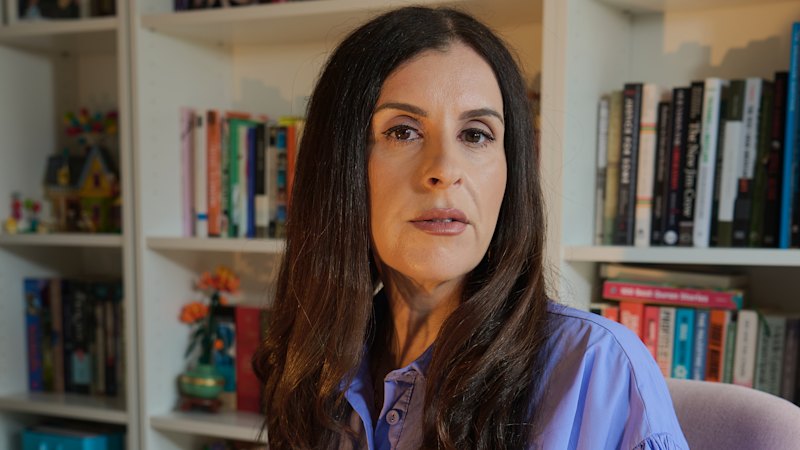
The backflip came a day after former Adelaide Festival board member Tony Berg accused Adler of hypocrisy over free speech, saying she threatened to resign from her role in 2024 unless the board cancelled an invitation to a Jewish New York Times journalist Thomas Friedman. On Thursday, Friedman told this masthead that he did not withdraw from the 2024 event of his own volition but was uninvited by organisers, who told him “the timing” would not work.
Earlier on Thursday, the Adelaide Festival Corporation apologised unreservedly to Abdel-Fattah and invited her to feature in the line-up next year. It also apologised to Adler for cancelling the literary festival she had programmed.
In a statement, the Adelaide Festival Corporation said: “On 8 January 2026 the Adelaide Festival Corporation published a statement announcing that it had decided to exclude Dr Randa Abdel-Fattah from participating as a speaker at Adelaide Writers’ Week this year.
British band Pulp, one of the headliners of this year’s Adelaide Festival, said late on Thursday night that it had planned to withdraw due to Abdel-Fattah’s removal from the writers’ week program, but would now perform at the free opening night concert on February 27 following the board’s apology.
“We told the festival organisers that we wouldn’t be able to play due to the dreadful situation with Dr Randa,” Pulp frontman Jarvis Cocker said in a statement posted to Instagram.
“We were asked to delay making this statement. They have now changed that situation [and] issued an apology to Dr Randa. Dr Randa is happy with that apology. We are happy that the situation has been dealt with [and] are now prepared to perform at the music festival once more.”
“We stated that this was because it would be culturally insensitive to allow her to participate. We retract that statement. We have reversed the decision and will reinstate Dr Abdel-Fattah’s invitation to speak at the next Adelaide Writers’ Week in 2027.
“We apologise to Dr Abdel-Fattah unreservedly for the harm the Adelaide Festival Corporation has caused her. Intellectual and artistic freedom is a powerful human right. Our goal is to uphold it, and in this instance Adelaide Festival Corporation fell well short.”
The statement continued: “The new Adelaide Festival Board would like to reassure the people of South Australia it is thoroughly committed to the successful delivery of Adelaide Festival 2026.”
Loading
Responding to the festival’s announcement via Instagram, Abdel-Fattah said she accepted the apology “as acknowledgement of our right to speak publicly and truthfully about the atrocities that have been committed against the Palestinian people”.
“I accept this apology as a vindication of our collective solidarity and mobilisation against anti-Palestinian racism, bullying and censorship,” she wrote. “I accept this unreserved apology as acknowledgement of the harm inflicted on our communities.”
Abdel-Fattah said she would consider the board’s invitation to participate in the event in 2027, “but would be there in a heartbeat if Louise Adler was the director again”.
In a post on Instagram on Wednesday, Abdel-Fattah wrote that Malinauskas’ comments “suggested I am an extremist terrorist sympathiser and directly linked me to the Bondi atrocity. This was a vicious assault on me.”
On Thursday, she confirmed that she would continue with her defamation case against Malinauskas. On Wednesday, her lawyer had sent a concerns notice to the premier over comments he made at a news conference the day before.
She said recent events surrounding the festival showed “the power of collective mobilisation and solidarity”. “In this moment, we have shown in less than a week what civil society can do in the face of ruling elites. And I hope arts and cultural institutions are paying attention and realising their duty of care and accountability to communities not powerbrokers.”
Adler said on Thursday it had been a torrid few weeks and that the new board’s move “offers the opportunity for a reset”.
“The statement of genuine apology to Dr Randa Abdel-Fattah recognises that her exclusion was deeply offensive, that cultural sensitivity is meaningless unless we are all entitled to it.”
“The statement … affirms [the board] is committed to artistic freedom of expression, and that’s also very important for the arts community,” she said.
Adler said the new board “have already brought to their deliberations wisdom, experience and the conviction that the arts matter. This is what the literary community needs to hear after what was felt to be a fundamental breach of trust.”
Loading
Conservative Jewish groups have previously criticised Abdel-Fattah for social media posts critical of Israel. South Australian Jewish leader Norman Schueler told Adelaide’s The Advertiser newspaper on Friday his community had asked that Abdel-Fattah be excluded. “Over a number of festivals there have been certain presenters who have been problematic, and we are extremely pleased that they have … for once listened to what we have to say,” he said.
The new board chair, Judy Potter, apologised to Adler on Thursday, saying the board was sorry “that the incredible Adelaide Writers’ Week program she had worked so hard to curate for 2026 has been cancelled as a result of the events that have unfolded over the last week after the announcement of the decision to rescind the invitation to Dr Abdel-Fattah”.
“We acknowledge the principled stand she took in the extremely difficult decision to resign from her role as director,” Potter said.
“Louise is a revered figure of Australian literature who we hold in the highest regard. Her contributions to, and stewardship of, Adelaide Writers’ Week in the time she has been the director (2023-2025) have been outstanding. We wish also to convey the warm affection of the staff for Louise and their gratitude for her strong convictions.”
The festival statement said a decision to establish a subcommittee of the board to review Adelaide Writers’ Week operational decisions had also been rescinded.
Potter said: “We commit to the curatorial independence of the director of Adelaide Writers’ Week while noting the board’s overarching responsibility for a well-delivered event of the highest quality.”
Abdel-Fattah continued: “Whilst AF’s statement acknowledges the harm done, it is not a quick fix to repair the damage and injury inflicted.
Loading
“This episode highlights three urgent matters: the profound lack of racial literacy in our public institutions and the need for urgent anti-racism education that is informed by Indigenous perspectives and frameworks; the need for public institutions to have safeguards against political interference by lobbyists; and the imperative of accountability for those who shirk their governance duties in a failure to understand that their duty of care is to their stakeholders and to the community, not groups acting in the interests of external political players.”
The Adelaide Festival on Thursday thanked the South Australian government for its help in delivering the 2026 program, the first presented by new artistic director Matt Lutton.
“We acknowledge and are grateful that the Premier Peter Malinauskas and Minister for Arts Andrea Michaels have taken swift action to appoint a new board enabling us to rapidly re-set and continue our work in delivering Matt’s outstanding program,” it said.
“We also appreciate the premier’s consistent position that the curatorial choices of Adelaide Festival, including Adelaide Writers’ Week, are at the discretion of the organisation,” festival chief executive Julian Hobba said in the statement.
With Michael Koziol and Stephen Brook
Start the day with a summary of the day’s most important and interesting stories, analysis and insights. Sign up for our Morning Edition newsletter.