Why historic arcades are important

There’s a controversy swirling at present around Sydney’s landmark Queen Victoria Building, which is one of the harbour city’s tourist attractions.
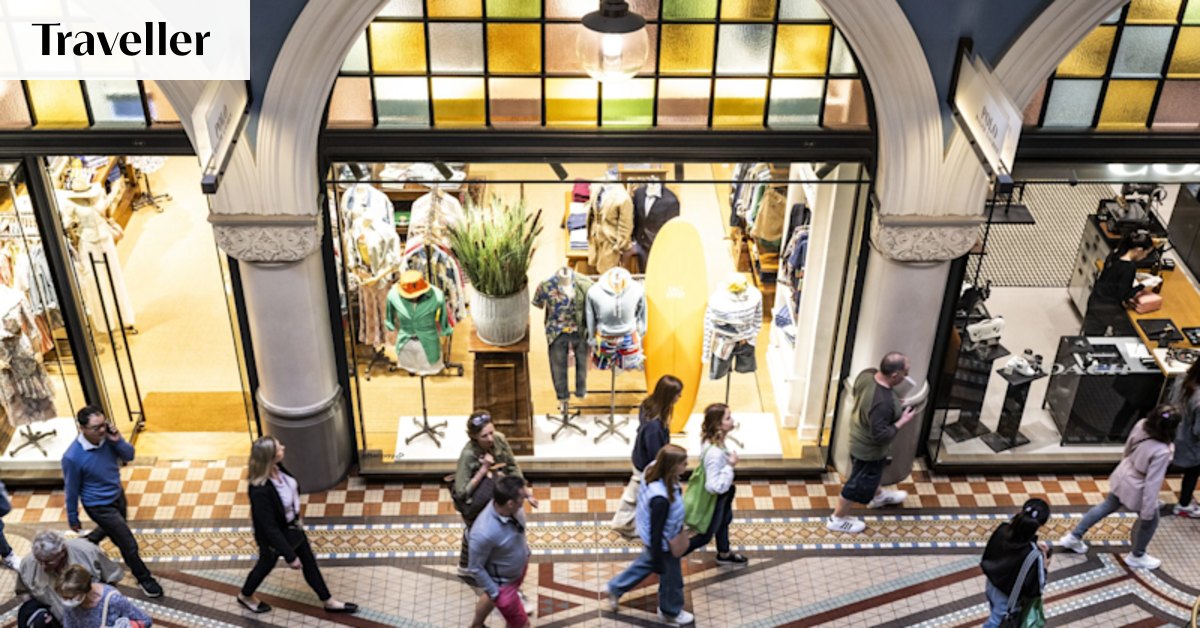
The landlord of the building has lodged a development application to change the building’s multicoloured glass windows on Market Street to ultra-clear, so they can better showcase the goods displayed inside.
The landlord argues that the coloured glass reduces the attractiveness and value of the space to potential retailers.
The actual pieces of coloured glass in question are a reglazing undertaken during a 1980s restoration, which returned the building to its original facade.
A fine example of 19th-century Romanesque Revival architecture, the shopping arcade is state heritage listed. Changes can be approved, but only under special legislation.
There is plenty of public resistance to the changes. The facade is iconic. The coloured glass gives the building unique character and draws people to the block in an otherwise dreary CBD.
There’s too much bland retail space already.
One of the reasons many of us shop online these days, apart from convenience, is that the modern equivalent of the Victorian shopping arcade, the mega mall, is so uninspiring.
The big global retail brands have turned the world’s shopping streets and malls into one big boring advertisement for the same merchandise.
Heritage arcades, with their smaller shops and architectural beauty, often house independent retailers among the known brands.
The first shopping arcades, built to keep shoppers protected from the weather, were also social and cultural hubs. The QVB is part of that tradition, a meeting place, especially at Christmas. So is Sydney’s other retail beauty, the Strand Arcade.
I grew up in Melbourne’s suburbs, and we would “go to town” regularly to visit the city’s heritage shopping arcades, the Royal Arcade to see the comically scary Gog and Magog clock, and the beautiful Block Arcade. There might have been some shopping involved, but there was also a sense of occasion about it. The arcades were attractions in themselves.
The great age of arcade building in Europe occurred between 1786 and the late 1930s. This had a big influence on Australia’s shopping landscape.
After the French Revolution, developers in Paris built hundreds of beautiful arcades to connect and cover shops, only to see about 150 of them razed by Baron Haussmann in the 19th century. There remain fewer than 30 these days, the largest number, nine, concentrated in the 2nd arrondissement near the Bourse.
The oldest arcade is Passage du Caire, which dates from Napoleon’s expedition to Egypt. Another is Passage des Panoramas, opened in 1799, which also contains the 215-year-old Theatre des Varieties.
The architectural details of different arcades are exquisite, including fish-bone glass roofs and cast-iron decorations. Some are well preserved, others a bit run down, but they all offer a mesmerising stroll through history.
The Royal Saint-Hubert Galleries in Brussels are three majestic interlinked grand glass-roofed galleries built between 1846 and 1847, considered the earliest covered shopping galleries in Europe.
Milan has its Galleria Vittorio Emanuele II (1865-1877), with its magnificent glass and cast-iron vaulted roof, connecting The Duomo and the Teatro Alla Scala, the city’s most famous landmarks.
If you enter a modern shopping mall with the pretentious name “galleria”, the concept comes from this building.
Budapest’s Parisi Udvar arcade was based on the Passage des Panoramas in Paris. The name means “Parisian Court”. Completed in 1913 with art nouveau, Moorish and gothic elements, it was completely abandoned over the years. Now it’s a luxury hotel, part of the Unbound Collection by Hyatt. There are cafes and bars you can visit, if not shops.
London has the gorgeous Burlington Arcade in Mayfair, built in 1819 by Lord Burlington so that his wife could shop safely away from the riffraff of the streets.
In Wales, Cardiff is known as the “City of Arcades”, boasting more Victorian and Edwardian arcades than any city in Britain.
Other British arcades of note include The Argyll Arcade in Glasgow, the city’s first purpose-built shopping arcade (1827), and the opulent Victoria Quarter in Leeds.
Global luxury brands tend to seek out leases in these lovely buildings for their prestige. The atmosphere is uplifting – and shoppers drop more money when they’re relaxed.
It’s only when they are threatened that people realise how important these heritage buildings are to them.
The QVB faced total demolition from 1959 to 1971 and was saved.
The current controversy might seem to be about a few coloured windows. But it’s really about memory, community and pride of place.
Sign up for the Traveller newsletter
The latest travel news, tips and inspiration delivered to your inbox. Sign up now.
 Lee Tulloch – Lee is a best-selling novelist, columnist, editor and writer. Her distinguished career stretches back more than three decades, and includes 12 years based between New York and Paris. Lee specialises in sustainable and thoughtful travel.Connect via email.
From our partners