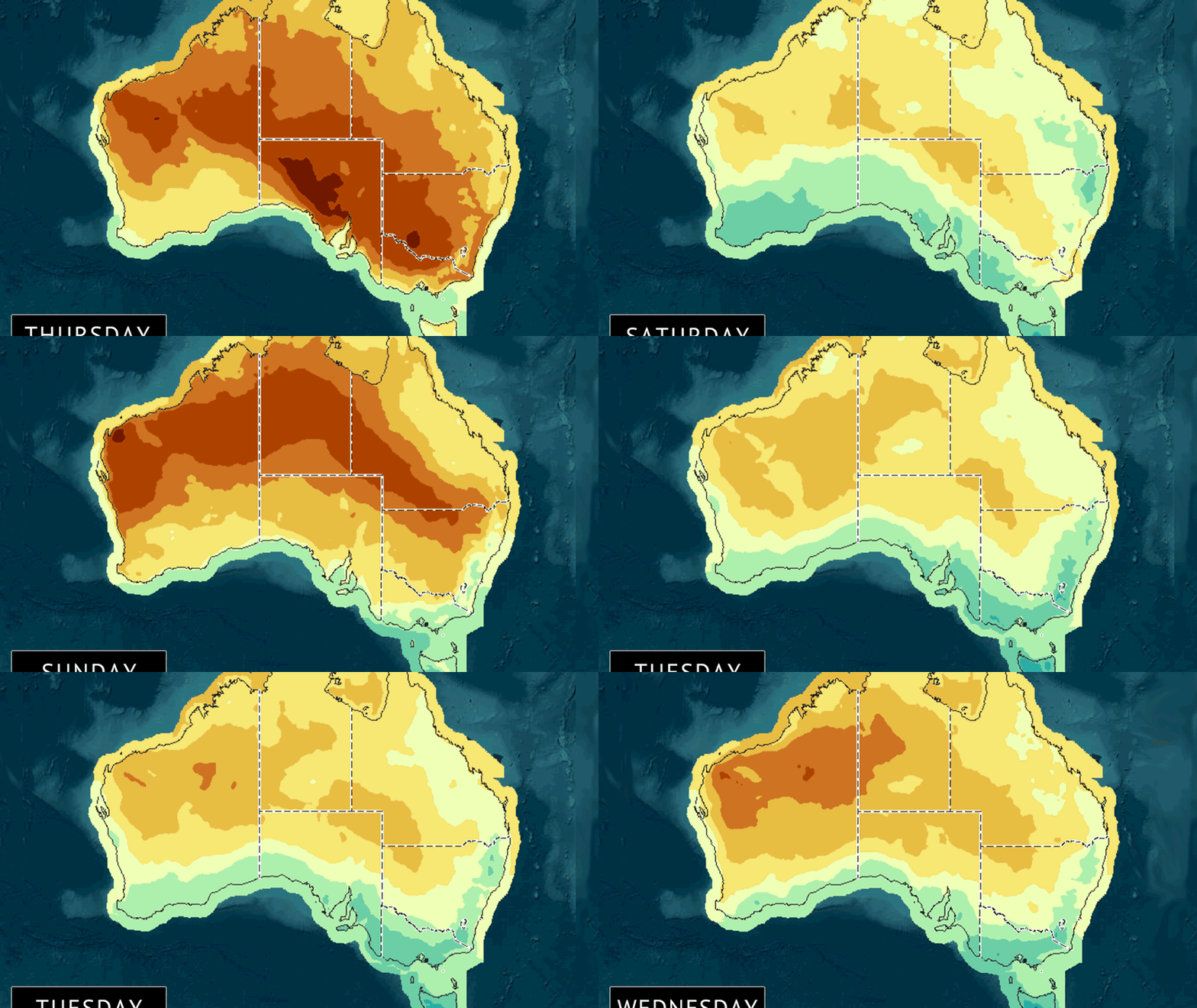
Australia’s summer bares teeth as the heat is unfurled from the west

“And then when the weather pattern changes … the wind can drag that heat and move it to other areas”, he said. “In this case, that hot air is moving in really quickly… so it gets dragged across the desert and it stays extremely warm.”

The sun rises over commuters at Westmead railway station during the Sydney heatwave on Thursday.Credit: Sitthixay Ditthavong
“Then that wind which is pulling it in also acts to … exacerbate the potential for fire,” Hines said.
By midweek, temperatures had spilled into the 40s in central Melbourne, while in Geelong the maximum climbed to 43.3 degrees. The Mallee and the Wimmera baked in 44.7 degrees.
While there was relief for south-eastern Australia on Thursday, with temperature dropping to the low 30s, authorities were bracing for new dangerous highs on Friday.
Expect “very significant fire conditions across the southeast” of Australia, Hines said, warning of a dangerous combination of intense heat and strong winds. Forecast dry thunderstorms in some areas of the south-east will increase bushfire risk further.
Loading
“It’s currently looking like we’ll see some areas of catastrophic fire danger,” he said. “Tomorrow’s a nasty day on a number of fronts.”
An extreme fire danger rating is set to cover the rest of Victoria, and a total fire ban has been declared statewide. Emergency warnings have been issued for fires already burning across the state.
The worst is still to come for NSW, with the heat rising in the west and south of the state and Sydney gearing up to peak on the weekend.
Friday could top out at 33 degrees in Sydney’s CBD and 42 degrees in Penrith. Saturday will be the hardest day for Sydney, with forecast highs of 42 degrees in the city and 43 degrees in the city’s west.
The Rural Fire Service has forecast an extreme fire danger forecast for the Greater Sydney Region on Saturday, along with the Southern Ranges, the ACT, the Monaro Alpine region and the Southern Slopes.
The heatwave is finally expected to ease on Sunday in Sydney, with a high of 26 degrees forecast for both the city and the city’s west, and up to 3 millimetres of rain.
Climate change is affecting how heatwaves form across the globe. A 2025 study published in Nature, analysing 213 heatwaves that occurred globally between 2000-2023, found that “climate change made all events more intense and more likely”.
The study found that one in four of the heatwaves analysed were “virtually impossible without climate change”.
Loading
Copernicus, the European Union’s climate monitor, revealed late last year that 2025 had tied with 2023 as the second warmest year on record.
The warmest year ever was 2024, “the first year with an average temperature clearly exceeding 1.5 degrees Celsius above the pre-industrial level,” according to the organisation’s Annual Climate Summary.
Climate scientist Professor Lesley Hughes said the world was heating in line with predictions.
“As a scientist I’m not surprised by the current heat,” she said. “It is hard to be hopeful when we see that we’re not acting fast enough … we must push ahead with strong action on pollution as the next few years are critical to avoiding far worse heatwaves.”