Government claims opposition policies would create $11 billion budget black hole

Finance Minister Danny Pearson said the opposition’s proposed tax cuts would leave a Coalition government with “zero headroom” to invest in the infrastructure needs of a fast-growing state.
Wilson said the modelling was flawed on several counts. She said the opposition would abolish the Emergency Services and Volunteers Fund but reinstate the Fire Services Property Levy it replaced. This would come at a cost of just over $3 billion to the budget, not the $7 billion contained in the government modelling, she said.

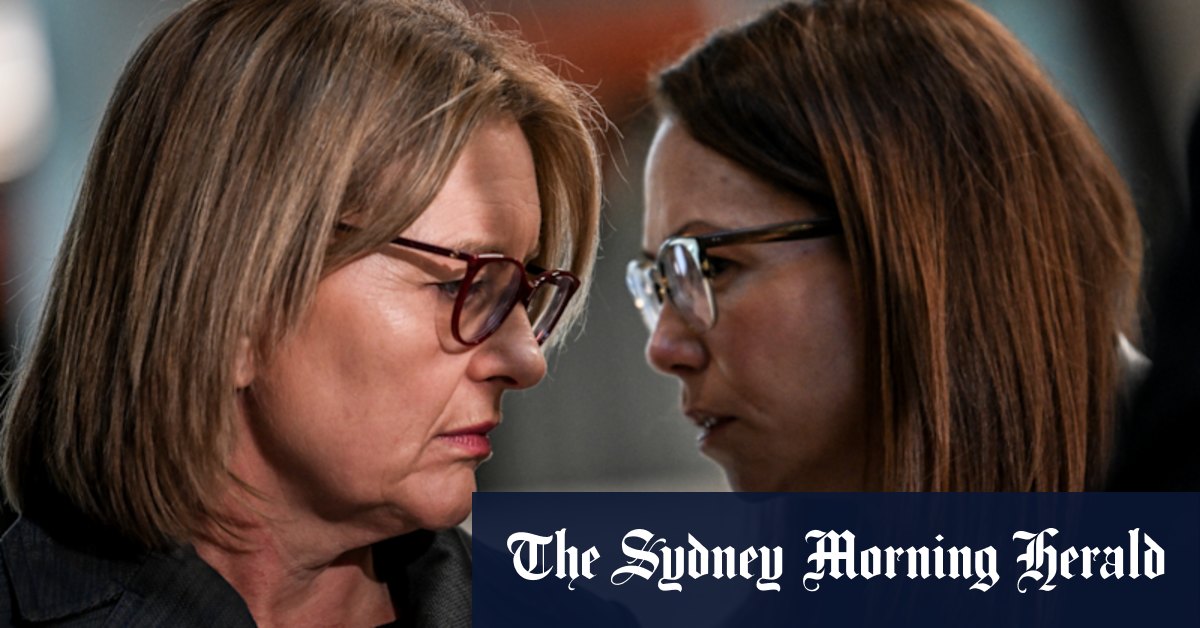
Shadow treasurer Jess Wilson says the government modelling is “wildly inaccurate”.Credit: Christopher Hopkins
She said the Parliamentary Budget Office had independently calculated the cost of the opposition’s stamp duty changes at half that claimed by the government modelling and that a Coalition government had no intention of freezing government charges.
According to the opposition’s costings, the total impact of its tax policies on the budget is about $5 billion.
“This is nothing more than a bizarre, desperate and wildly inaccurate attempt by Labor to distract from their own shocking record of financial mismanagement,” Wilson said.
“Labor knows their highest-in-the-nation tax regime is hurting Victorians and our economy, but with net debt growing by $2 million an hour they have no choice but to continue squeezing money out of hardworking Victorians.”
The government modelling is based on budget figures and previous public statements made by the opposition, including the budget reply speech delivered by Wilson’s predecessor James Newbury, a social media post by Opposition Leader Brad Battin and a recent media interview by former Liberal leader Matthew Guy.
The government’s attempt to shift scrutiny onto the Coalition’s tax promises reflects the pressure it is under, particularly from business and property groups, as it attempts to bring the budget back to operating surplus for the first time since the pandemic.
This masthead has previously reported that the government is struggling to secure crossbench support for its proposed expansion of the congestion levy, which is a scaled system of charges on city and inner-suburban car parks.
Although the proposed levy is worth only an additional $85 million a year to the budget, it is one of two additional revenue measures noted by S&P Global Ratings in July when it last affirmed the state’s AA credit rating – the lowest of any Australian state.
S&P analyst Rebecca Hrvatin said the rating was predicated on the state government delivering “ongoing cash operating surpluses and showing fiscal restraint”.
Loading
“We consider Victoria’s commitment to contain operating expenditure costs, deliver promised cost savings and slow debt growth as important,” Hrvatin said.
“The state’s efforts to rebuild fiscal buffers have been weak. The government is tending to spend all unexpected revenue gains that it receives, and it also seems to be struggling to implement previous savings measures, such as workforce reductions.”
Symes’ most ambitious attempt to achieve budget savings will be contained in her response to former top bureaucrat Helen Silver’s blueprint to reduce the size and cost of the Victorian public service. The Silver report and government response are expected to be made public in December alongside the mid-year budget update.
Get the day’s breaking news, entertainment ideas and a long read to enjoy. Sign up to receive our Evening Edition newsletter.