RAMA DUWAJI’S MOST INTENTIONAL FASHION MOMENT YET –

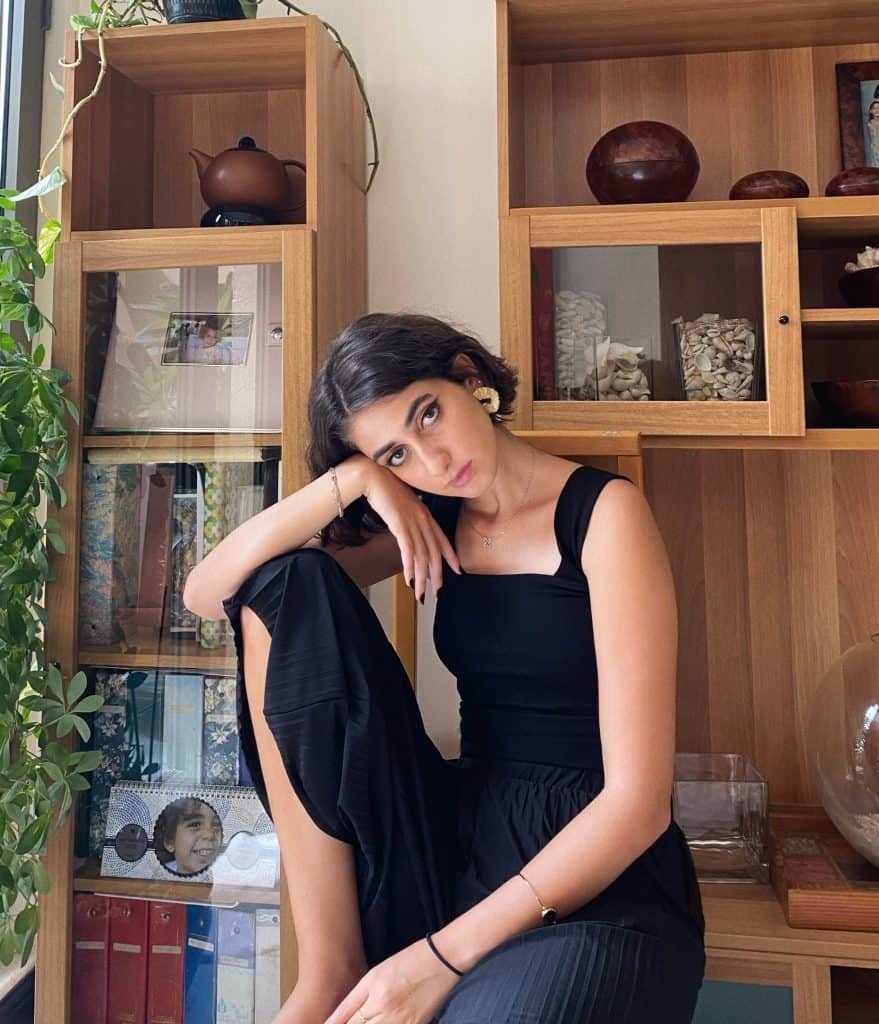
When Rama Duwaji appears in her recent fashion editorial, it doesn’t feel like a debut so much as a quiet arrival. The images resist spectacle. Instead, they unfold slowly—measured, thoughtful, and self-possessed—mirroring the woman at their center.
At a moment when fashion editorials often chase virality, Duwaji’s feels almost radical in its restraint. There is no performative glamour here, no exaggerated styling designed for shock value. What emerges instead is something far more compelling: presence.
An Editorial Rooted in Intention, Not Costume
The clothes throughout the shoot are elegant but never loud. Tailored silhouettes anchor the story—structured coats, sculptural dresses, precise layering—rendered in a muted palette that feels distinctly New York. Nothing overwhelms her. Everything supports her.
This is styling that understands the power of subtraction. Each look feels chosen rather than assembled, reinforcing the idea that fashion, at its most luxurious, is about editing.
Rather than leaning into the visual tropes often assigned to women adjacent to power, the editorial positions Duwaji as autonomous. She is not styled as a symbol, nor as an accessory. She is presented simply as herself.
Where Art and Fashion Converge
Duwaji’s background as an artist subtly informs the mood of the shoot. The compositions feel painterly. The poses are still, deliberate, and unforced. There’s an awareness of negative space—both visually and emotionally—that gives the images their quiet gravity.
Fashion, here, becomes another medium. The garments operate like brushstrokes rather than declarations. The result is an editorial that feels closer to portraiture than performance.
This sensibility sets the shoot apart. It doesn’t demand attention; it rewards it.
Redefining Visibility on Her Own Terms
What makes this editorial resonate is not only how Duwaji looks, but how she chooses to be seen. In a media landscape that often rushes women into archetypes, the pacing of this moment feels intentional.
She doesn’t overexplain. She doesn’t overshare. Instead, she allows the images to hold complexity—strength without severity, elegance without excess, intimacy without exposure.
That balance feels particularly relevant now, as public figures increasingly navigate visibility in a hyper-documented world. Duwaji’s editorial offers an alternative model: one rooted in clarity, self-definition, and control.
A New Kind of Fashion Figure
This is not the unveiling of a fashion muse in the traditional sense. Nor is it a reinvention narrative. It’s something subtler—and arguably more powerful.
Duwaji enters the fashion conversation not as a trend, but as a point of view. Her style communicates thoughtfulness. Her presence signals confidence without ambition for dominance. In a city that values both individuality and intellect, the editorial feels entirely at home.
Why This Moment Matters
Rama Duwaji’s editorial arrives at a cultural crossroads—where fashion, identity, and public life increasingly overlap. Yet rather than amplifying noise, the shoot offers quiet authority.
It suggests that modern elegance doesn’t need theatrics. That fashion can be expressive without being declarative. And that sometimes, the most enduring images are the ones that don’t ask for permission to linger.
Images were captured by: Szilveszter Makó