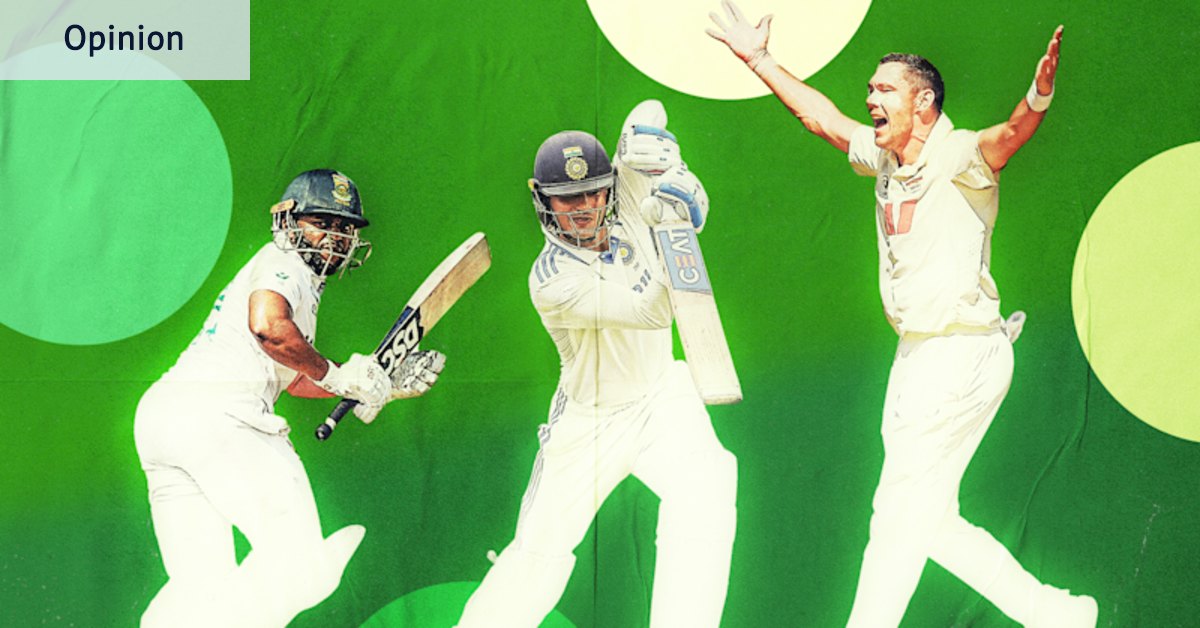
Mitchell Starc, Shubman Gill, Alex Carey and Joe Root shine brightest as the likes of Steve Smith, Jasprit Bumrah and Kane Williamson miss out

2. Travis Head
As the second leading run-scorer for the year, Head deserved a cap; the debate was where in the batting order.
We’ve settled on him in his new role as opener, which also solves our leadership issue.
His two centuries are a key factor why Australia won the Ashes, while 514 runs at 51.40 stacks up well against his rivals. Ben Duckett’s lean Ashes cost him, and Devon Conway was very stiff to miss with an average of 87, albeit against lowly opposition.
3. Shubman Gill
Former international coach Mickey Arthur has long been a fan of Gill – and now we know why.
Appointed captain in May, Gill made scores of 147, 269 and 161 in his first two Tests in charge and was the leading run-scorer of the year with 983 at 70.2, including five tons.
Though clearly the best-performed of all Test captains, India’s patchy form, losing five of 10 Tests, made it difficult to give him the job in this team.
4. Joe Root
The “Fab Four” batters of world cricket (Smith, Virat Kohli, Williamson and Root) is now down to three – and Root is the only member of that group to get a cap in this team.
In fact, the No.1-ranked Test batter was among the first picked after big runs at home against India.
A drought-busting ton and a maiden Test win on Australian soil filled two of the few gaps left on his CV, though he’d have loved a few more decent scores this summer.
5. Temba Bavuma (c)
Can a player be picked after just four games, let alone be made captain?
The answer is yes if in those games he has contributed with the bat, led his country to victory in the world Test championship final (his team’s first major global title), and a Test whitewash of India in India. To do it at a time when South Africa is leaning more towards Twenty20s adds merit.
Harry Brook’s looseness cost him and Smith was strongly considered as captain but Bavuma’s captaincy record – four wins from four in 2025 and 10 wins and a draw from 11 overall – is compelling.
6. Alex Carey
Hands down the best wicketkeeper in the world, Carey was an easy choice to don the gloves.
Rishabh Pant posted similar numbers with the bat but the Australian’s skill behind the stumps, particularly standing up to the pegs to the seamers, made it a short discussion.
With an average of nearly 48 and two tons playing largely on bowler-friendly tracks, there are no concerns at all bumping him up the order to No.6 (his current spot in the Australian line-up).
7. Ravindra Jadeja
The all-rounder’s spot was one of the more difficult spots to pick.
Ben Stokes had a strong case, but Jadeja’s numbers with the bat demanded selection.
He had one of his leaner years with the ball but did enough to play the role of a second spinner in suitable conditions, or to give selectors the chance to pick four frontline quicks on a seaming track. One of three players to retain his place from last year.
8. Mitchell Starc
When he is old and grey, Starc will look back on 2025 with fondness.
The pace ace snared a career-best wicket haul, broke Wasim Akram’s record for most wickets by a left-arm quick, and also claimed a hat-trick. With Josh Hazlewood and Pat Cummins injured, he led Australia’s attack to Ashes glory.
That Starc can still reach these heights at the age of 35 is testament to his preparation, stamina and love of Test cricket. He needs just 12 more wickets to break into the top 10 of all-time.
9. Simon Harmer
Simon Who? The South African off-spinner wasn’t on the radar until he dominated in the Proteas’ tours of Pakistan and India.
Harmer’s 17 wickets at 8.94 in India spun South Africa to their first series win in that country in 25 years.
He may not even be his own country’s first-choice spinner when they next play, but he gets the nod from me here.
10. Scott Boland
The cult hero of Australian cricket wins a line-ball call ahead of Kagiso Rabada, who played just four games but made a strong case with nine wickets in the world Test championship final.
Boland’s quality and quantity could not be ignored.
His 10 wickets against India in the first week of the year were integral to Australia regaining the Border-Gavaskar Trophy, and he swung the Ashes with his burst in Perth.
11. Mohammed Siraj
A fierce competitor, the Indian paceman is one of the most wholehearted players in world cricket.
His effort in the epic finale against England was heroic, taking nine wickets from 46 overs in the second of back-to-back Tests.
Three wickets came on a memorable final day, turning certain defeat into a series-levelling victory.
12th man: Kagiso Rabada
South Africa’s fiery quick was extremely unlucky not to make the XI.
His nine wickets in the world Test championship final are the reason the Proteas won their first major global title – but his lack of games cost him as competition was intense in the pace department. We reserve the right to inject him into the XI after a final pitch inspection.
News, results and expert analysis from the weekend of sport sent every Monday. Sign up for our Sport newsletter.