The most anticipated books coming in the first half of 2026

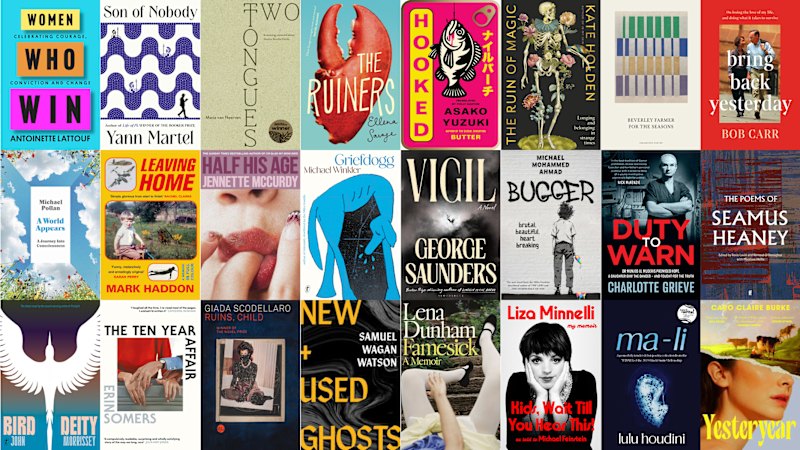
The reading year doesn’t ease in gently between January and June – publishing delivers big returns, bold debuts and buzzy books that become unavoidable on shelves and screens. The first stretch of 2026 brings prize-level literary fiction from local and international heavy hitters, risk-taking first novels, tell-all memoirs and non-fiction that is already testing nerves. These are the 60 books landing early – the ones most likely to shape conversations, stacks and strong feelings long before winter arrives. Your to-be-read pile has been notified.

Look forward to new books by (front from left) John Morrissey, Asako Yuzuki and Julian Barnes plus (back from left) Ann Patchett, Michael Mohammed Ahmad and Jennette McCurdy.
The Ten Year Affair by Erin Somers (January 6)
Start your reading year with a laugh with this bingeable novel. Cora meets Sam at a parents’ group in their small town; both are married, stalled professionally and quietly restless. Their will-they-won’t-they unfolds across two timelines that gradually collapse, becoming less about infidelity than marriage, parenthood and middle-aged ennui.
The Poems of Seamus Heaney edited by Rosie Lavan and Bernard O’Donoghue with Matthew Hollis (January 6)
The definitive edition of Irish writer Seamus Heaney’s poetry, gathering everything he published in his lifetime alongside a few posthumous poems. Generous notes and critical introductions deepen the experience, making this both a scholarly cornerstone and a welcoming entry point for new readers.
Loading
Departure(s) by Julian Barnes (January 20)
Approaching 80 and publishing his 15th novel, the veteran writer turns his clear-eyed reckoning towards time, memory and ageing. This elegant novel traces the entwined lives of Stephen and Jean, who fall in love when they are young and again when they are old. A meditation on memory, featuring a special Jack Russell called Jimmy.
Half His Age by Jennette McCurdy (January 20)
Fans of the former child actor’s smash hit memoir I’m Glad My Mom Died won’t be disappointed by her highly anticipated turn to fiction. McCurdy channels her dry nerve and unblinking honesty into a story about a relationship between a 17-year-old girl and her married English teacher. It’s explicit about sex (the cover image alone might make you blush), but particularly interesting on class, family and the terrible confidence of adulthood.
Bugger by Michael Mohammed Ahmad (January 27)
In his fourth novel, following The Tribe, The Lebs and The Other Half of You, the acclaimed author turns to a story of sexual abuse, and how it can cleave a life into before and after. Confronting and controlled, it follows 10-year-old Hamoodi as he navigates the uneasy bargains of family, faith and belonging – and the damage caused when silence is mistaken for safety.
For the Seasons: Haikus by Beverley Farmer (February 1)
Best known for her prose, the Australian writer (A Body of Water, The House in the Light, Home Time) is revealed here as a formidable poet. Rediscovered after she died in 2018 by scholar Lyn Jacobs, these haikus – written decades ago – trace the seasons along Victoria’s coast. Spare and attentive, they show how much feeling can live inside restraint.

Credit:
Two Tongues by Maria van Neerven (February 3)
From the winner of the 2023 David Unaipon Award, this debut poetry collection is a multilingual work and a love letter to the Yugambeh language. Van Neerven writes with clarity about family, culture and the afterlife of colonisation, reclaiming what was taken while insisting on pride, survival and continuity.
Bird Deity by John Morrissey (February 3)
Promising to be as imaginative as his sci-fi short story collection Firelight, which saw Morrissey named a 2024 Best Young Australian Novelist, this debut novel follows David, who has spent a decade salvaging the ruins of an alien civilisation. Preparing to leave a rich man, he is instead drawn back by absence, unease and one final expedition.
Vigil by George Saunders (February 3)
The Booker Prize-winning author returns to the space between life and death. Set over a single night, this masterful novel follows Jill “Doll” Blaine, a spirit assigned to comfort a dying oil executive uninterested in repentance. With Saunders’ classic warm yet wry tone, it asks what reckoning looks like when remorse refuses to cooperate.
Ma-li by Lulu Houdini (February 24)
From the winner of the 2024 black&write! Fellowship, this debut poetry collection draws on Houdini’s work as a midwife and her connection to Country. Written in English and Gamilaraay, the poems promise a sensual meditation on birth, matriarchal strength and continuity.
Kin by Tayari Jones (February 24)
The author of the bestselling An American Marriage returns with a novel about friendship and divergence. Two motherless girls grow up side by side in a small Louisiana town, but are fated to live very different lives. Jones writes with assurance about intimacy, ambition, hauntings and being a Black woman in the American South.
Hooked by Asako Yuzuki (March 12)
After the cult success of Butter, which had the rare effect of making us both ravenous and faintly nauseous, the Japanese writer turns again to food, friendship and obsession. Eriko’s orderly life begins to unravel when she becomes fixated on a housewife’s blog in this unusual study of loneliness, appetite and imagined closeness.

Credit:
Ruins, Child by Giada Scodellaro (March 24)
The Novel Prize – awarded biennially by Fitzcarraldo Editions, Giramondo and New Directions to unpublished manuscripts, and previously won by Jessica Au, Anne de Marcken and Jonathan Buckley – is always one to watch. This year’s winner imagines six women sharing a crumbling apartment tower. The story is told through loose fragments in a style the publisher says is reminiscent of Virginia Woolf’s The Waves.
Loading
The Trap by Fiona Kelly McGregor (March 31)
Following the highly acclaimed Iris, McGregor moves to wartime Sydney and a real police entrapment scandal targeting queer men. Nightclubs, sly-grog shops and public toilets form the backdrop as the corruption is closed in upon. A historically grounded novel exploring desire, exposure and survival in a city under strain.
Griefdogg by Michael Winkler (March 31)
Winkler’s debut Grimmish made Miles Franklin history when it became the first self-published novel to reach both the longlist and shortlist. His second novel follows a Mildura hydrologist who decides to live as the family dog – and discovers an unsettling ability to sense grief. Expect it to be comic, strange and quietly moving.
Kill Your Boomers by Fiona Wright (March 31)
The essayist and poet’s debut novel takes aim at the Sydney housing crisis. Keira is stuck in a decaying share house while inheritance reshapes her friends’ futures and her own jet-setting parents warn her about financial responsibility. When parental money becomes a looming solution, desperation sharpens into something darker – and all too recognisably millennial.
Son of Nobody by Yann Martel (March 31)
The Booker Prize-winning author of Life of Pi turns to the classical world. When a Canadian academic uncovers an unknown account of the Trojan War at Oxford, scholarship collides with family life. Prepare yourself for a novel about how stories are made, translated and lived alongside ordinary responsibility.
The News from Dublin by Colm Toibin (March 31)
This new collection of short stories – many published for the first time – spans countries, cultures and time zones. For readers who arrived via Brooklyn or Long Island, it’s an ideal introduction to Toibin’s short fiction: attentive to family life, distance from home and the weight of the past.

Credit:
The Water Takes by Sarah Walker (March 31)
When legendary publisher Jane Palfreyman describes a novel as one of the best debuts she’s read, you pay attention. When sinkholes open across a town, Pam, a caustic woman in her 70s, is forced into alliance with Charlotte, her 10-year-old neighbour. A literary apocalypse about care, endurance and reluctant companionship.
A Rising of the Lights by Steve Toltz (April 8)
One of Australia’s funniest writers tells the story of child psychologist Rusty Wilson, who has lost his job, his wife, and now has to take in his two ageing parents while balancing a rekindling with a childhood best friend and a world being overtaken by robots. A hilarious yet tragic lament for the loneliness of the modern world. I loved every moment of reading this novel.
Yesteryear by Caro Claire Burke (April 28)
Already shaping up as one of the buzziest debuts of 2026 – and now adapted into a major film starring Anne Hathaway – this satirical thriller skewers curated domestic perfection. Natalie’s influencer life fractures overnight, leaving her trapped inside a version of reality that looks ideal and feels profoundly wrong.
Goodbye, My Love by Yumna Kassab (April 28)
Following The House of Youssef and Politica, Kassab turns to the afterlife of a marriage. Amina’s divorce should mark an ending, yet the relationship continues to define her. Set within an Arab community, this novel aims to examine departure, memory and the difficulty of leaving without erasing yourself.
The Things We Never Say by Elizabeth Strout (May 5)
The much-loved writer steps away from Maine and the familiar worlds of Olive Kitteridge and Lucy Barton. Set on the Massachusetts coast, this novel follows a high-school teacher whose orderly life is unsettled by a long-buried truth. Strout doing what Strout does best: a restrained study of marriage, isolation and the difficulty of truly knowing those closest to us.
The Thornbacks by Chloe Wilson (May 5)
Following her brilliant short story collection, Wilson’s debut is narrated by two middle-aged morticians who moonlight as a dead woman on dating apps. Bodies become spaces of control, intimacy and violence. A darkly funny, unsettling novel that trusts its own oddness – and is the better for it.

Credit:
The Ruiners by Ellena Savage (May 26)
Following her standout nonfiction work Blueberries, Savage’s debut novel – described by its publisher as a “sexy, literary page-turner” – follows Pip, a restless waiter at a Melbourne lobster shack who inherits money, meets a dashing young scholar and buys a house on a struggling Greek island. Smart and sharp, I reckon you’ll be seeing this novel everywhere in 2026.
John of John by Douglas Stuart (May 26)
The Booker Prize-winning author returns with a novel set on the Hebridean island of Harris. Art school graduate John-Calum comes home broke and changed, unsettling a fragile family balance between his sheep farmer father and Glaswegian grandmother. Expect a heartstring-pulling examination of faith, masculinity and what it means to belong somewhere small.
Land by Maggie O’Farrell (June 2)
Following Hamnet (Chloe Zhao’s film adaptation hit cinemas in January) and The Marriage Portrait, O’Farrell turns to post-Famine Ireland. In 1865, Tomas and his young son are mapping the land for the Ordnance Survey when a disturbing encounter alters their course. A definite for the book clubs.

Credit:
New + Used Ghosts by Samuel Wagan Watson (June 2)
The first work of fiction from the award-winning Birra-Gubba and Mununjali poet turns to ghost stories as acts of memory. Drawing on First Nations storytelling, the collection of stories and prose poems examines Country, culture and colonisation, treating spirits as presences that refuse erasure when land and language are under pressure.
Whistler by Ann Patchett (June 2)
When Daphne unexpectedly encounters her former stepfather in the Metropolitan Museum, past and present begin to overlap. The author of The Dutch House and Tom Lake turns her powers to chosen family, emotional repair and the strange intimacy of people who once mattered greatly.
Villa Coco by Andrew Sean Greer (June 9)
The Pulitzer Prize-winning author of Less heads to Tuscany. A drifting young archivist takes a job at a decaying villa owned by an imperious aristocrat with unfinished business. Greer is such a comic and generous writer, I can’t wait to read his latest gem.

Look forward to new books by (front from left) Hang Kang, Charlotte Grieve and Stan Grant plus (back from left) Lena Dunham, Siri Hustvedt and Sylvester Stallone.
Stolen Man on Stolen Land by Tyree Barnette (January 27)
Barnette, who moved from North Carolina to Sydney and is a member of the Sweatshop Literacy Movement, offers a fresh perspective on conversations about race in Australia in this thoughtful memoir. As admiration for Black American culture slides into fetishisation, he reflects on the undercurrents of racism in Australia and ongoing Indigenous dispossession.
Duty to Warn by Charlotte Grieve (January 27)
An investigative journalist at this masthead, Grieve reveals the inside story of how a question about her father’s medical care led to a protracted defamation trial involving high-profile surgeon Dr Munjed Al Muderis. Medical risk, legal intimidation and the uncomfortable realities of holding powerful institutions to account – surely we need a screen adaptation next?
Fear and Fury by Heather Ann Thompson (January 27)
The Pulitzer Prize-winning author revisits the 1984 Bernhard Goetz subway shooting to examine how fear, media and race reshaped American politics. Drawing on new archives, she centres the lives of the young men who were shot, creating a forensic account of how violence becomes narrative.
Loading
Run For Your Life by Konrad Marshall (January 28)
Set yourself a running goal for 2026? This book might help. Marshall, a Good Weekend reporter more used to observing sport than participating, committed to running every day for a year. Along the way he runs with and speaks to figures including Grace Tame, Gout Gout, Jelena Dokic and Nedd Brockmann. A reported and personal experiment in endurance, obsession and why running exerts such pull.
The First Albanese Government edited by Michelle Grattan, John Halligan, John Hawkins (February 1)
From a razor-thin election victory to a majority in 2025, this collection tracks the Albanese government’s first term. Featuring a preface by Bill Shorten and insights from Australia’s top political minds, it dissects the triumphs and stumbles of a shifting era while charting the Albanese government’s future path.
My Cursed Vagina by Lally Katz (February 3)
The acclaimed Australian/American playwright behind works including Neighbourhood Watch, Stories I Want to Tell You in Person and The Eisteddfod turns her eye on her own life. This memoir begins with a dubious psychic diagnosis and unfolds into a candid account of sex, illness, creativity and motherhood, no doubt told with the same unfiltered honesty that defines her writing for stage and screen. Buckle up!

Credit:
Don’t Burn Anyone at the Stake Today by Naomi Alderman (February 17)
The Women’s Prize-winning author of The Power steps away from fiction to think about how we live with constant information. Framing the internet as the latest in a series of historical upheavals, she considers why overload breeds fear and distortion. A measured book that prefers context to panic, and history to hot takes.
A Hymn to Life: Shame Has to Change Sides by Gisele Pelicot (February 17)
Pelicot became a public figure after waiving anonymity in a landmark French sexual assault trial involving her former husband, who had been drugging and raping her for decades, and 50 other men. In this memoir, she tells her story for the first time, moving beyond the courtroom to examine her childhood, career and reclaiming her life after catastrophe.
Formula One: The World’s Most Brutal Sport by Stewart Bell (February 24)
If Drive to Survive and Oscar Piastri have given you a sudden need for speed, Bell offers the cold shower. Drawing on two decades covering Formula One, he looks past the glamour to the physical strain, money churn and disposability built into the sport’s global machine.
Loading
A World Appears by Michael Pollan (March 3)
The author of How to Change Your Mind and In Defence of Food turns his attention to consciousness and the problem of subjective experience. Moving between science, philosophy and culture in his eminently readable way, Pollan asks what it means that being alive feels like something at all. Prepare to have your mind scrambled and unscrambled all at once.
Bring Back Yesterday by Bob Carr (March 3)
The former NSW premier and foreign minister writes after the sudden death of his wife of 50 years, Helena, in 2023. This raw memoir turns away from public life toward routine, walking, remembering and the private work of continuing after loss.
Kids, Wait Till You Hear This! by Liza Minnelli (March 10)
The stage and screen icon lifts the curtains on her own life in her first memoir. Minnelli delves into growing up around fame as the daughter of Vincente Minnelli and Judy Garland, her Broadway and Hollywood rise, the scandals that shook her and her battles with substance abuse. After claiming that other accounts of her life got it wrong, this is her story, told her way.

Credit:
Even the Good Girls Will Cry by Melissa Auf der Maur (March 17)
The singer-songwriter writes about coming of age inside 1990s alternative rock, from Hole and The Smashing Pumpkins to the wider scene orbiting Courtney Love and former lover Dave Grohl. A journey through a decade that still casts a long shadow.
Light and Thread by Han Kang (March 24)
We Do Not Part was a truly astonishing work of fiction. Now, in her first book since winning the Nobel Prize for Literature, Kang gathers essays, poems, photographs and diary fragments to trace the links between her inner life and the world around her. There’s nowhere else I’d rather be.
Look After Your Feet by Rosalie Ham (March 31)
The novelist behind The Dressmaker turns to non-fiction with a dry-eyed look at ageing. Bodies, pride and the slow negotiations of getting older explored no doubt with the same observational sharpness that powers her fiction. “I know that I’m well-equipped to do the next bit of the adventure brilliantly. As long as my feet hold up,” Ham says.
Delicious by Kate Legge (March 31)
After the highly talkable Infidelity – her clear-eyed account of marriage and betrayal – Legge turns to food. This memoir tracks relationships through shared meals, recipes and kitchens, in celebration of the strange alchemy of food and love. Bon appetit!
A.D. Hope by Susan Lever (March 31)
The first full biography of Alec Derwent Hope, one of Australia’s most influential poets, who died in 2000. Drawing on his poetry, letters and notebooks, Lever traces a life shaped by censorship battles, sharp criticism and institutional power. An important work about a man of contradictions.
The Ruin of Magic by Kate Holden (April 7)
Holden blends memoir with cultural inquiry in essays that her publisher compares to the likes of Andre Aciman, Maggie Nelson and Katherine May. Moving between Europe and Australia, she reflects on nostalgia, home and the erosion of enchantment under modern glare. Sounds beguiling.

Credit:
Leaving Home by Mark Haddon (April 14)
In this illustrated memoir, the author of everyone’s favourite The Curious Incident of the Dog in the Night-Time looks back on childhood, family and becoming an artist. It sounds heartbreaking and hilarious – and I can’t wait.
London Falling by Patrick Radden Keefe (April 14)
From the author of Empire of Pain and Say Nothing, this investigation revisits the 2019 death of a London teenager who fell from a luxury apartment building. Radden Keefe traces how the teen came to live an elaborate fantasy life, posing as the son of a wealthy Russian oligarch, and asks why that fiction proved so dangerous.
Famesick by Lena Dunham (April 14)
The Girls and Too Much creator reflects on fame, illness and the years following early success. Moving between public life and private breakdown, she considers ambition, the price of fame and how the body keeps score. More than 10 years after her memoir Not That Kind of Girl, Dunham’s return to the page comes highly anticipated.
The Titanic Story of Evelyn by Lisa Wilkinson (April 14)
In her first work of historical non-fiction, the journalist seeks to recover the life of Evelyn Marsden, the only Australian-born survivor of the Titanic. Drawing on archival research, she follows a nurse whose quiet heroism has largely slipped from national memory. Sounds like Wilkinson is doing for the history gals what her husband Peter FitzSimons has for the likes of Weary Dunlop, Hubert Wilkins and Albert Jacka.
The Age Code by David Cox (April 23)
Finally, a scientific explanation for why I feel 84 after a late-night taco run. Dr David Cox examines the role diets play in ageing us faster than we should. Moving through nutrition science and new diagnostic tools, he explores what food can realistically change – and what it can’t.
Women Who Win by Antoinette Lattouf (April 28)
After one of the biggest media court cases of 2025, Lattouf steps back to widen the lens. This book moves briskly through women who challenged power – in law, politics, protest and the workplace – while threading in her own ABC case. An important takeaway, everyone: don’t tell women to calm down!

Credit:
Sirens: Inside the Shadow World of First Responders by Martin McKenzie-Murray (April 28)
Martin McKenzie-Murray profiles a paramedic, a firefighter and a police officer to examine what draws people to crisis work – and what it takes from them. Informed by trauma research and lived experience, this promises to be an intimate and important read.
When Words Fail Us: Truth Beyond Time by Stan Grant (May 1)
“I am out of words at home. I have grown bored with my language; bored with my voice; bored with my writing,” the bestselling author writes. After years at the centre of Australia’s loudest conversations, Grant draws on philosophy, history and personal exhaustion to question what language can still do — and when silence might say more.
Ghost Stories by Siri Hustvedt (May 5)
The novelist and essayist writes in the aftermath of the death of her husband of 43 years, the writer and poet Paul Auster. Moving between journals, letters and memory, Hustvedt resists narrative closure, allowing grief to remain unfinished. The book documents a shared life, and features Auster’s last ever piece of writing.

Credit:
The Steps by Sylvester Stallone (May 5)
The Rocky and Rambo icon uses the Philadelphia Art Museum steps as a way to think about work and persistence. Framed between the actor’s arrival in New York City in 1969 and the success of Rocky at the 1977 Academy Awards, the memoir lingers upon how success arises from perseverance in the face of challenges. Or as Rocky says: “Going in one more round when you don’t think you can, that’s what makes all the difference in your life.”
On Witness and Respair by Jesmyn Ward (May 19)
This collection gathers a decade of the bestselling novelist’s non-fiction, including new speeches, essays and her classics. Dubbed “the heir apparent to Toni Morrison”, Ward reflects on race, grief, literature and raising a son. A perfect reminder to revisit her stunning novels Salvage the Bones and Sing, Unburied, Sing too.
The Land and Its People by David Sedaris (May 26)
One of the great humorists of our time returns with an essay collection about travel, caretaking and the slow thinning of his social circles. With his trademark blend of irritation and care, Sedaris’ work is always a reminder to pay attention.
The Booklist is a weekly newsletter for book lovers from Jason Steger. Get it delivered every Friday.