Top barrister opposes push for royal commission into antisemitism

“Any call for a royal commission is premature until we find out what Richardson has to report,” Richter said, referring to the government’s intelligence and security review led by former senior public servant Dennis Richardson.
That position places him at odds with an unusually broad coalition of senior legal figures.
Former chief justices, former judges, the inaugural Commonwealth Director of Public Prosecutions, Ian Temby, KC, former Federal Court chief justice James Allsop, former solicitor-general David Bennett, and dozens of senior silks argue that antisemitism has reached a point that demands a federal royal commission with statutory powers and public transparency.
Their letter cites arson attacks on synagogues and Jewish businesses, vandalism of Jewish MPs’ offices and widespread fear among Jewish students. A departmental review, they argue, lacks the independence and authority required.
Richter, who defended Cardinal George Pell against sexual abuse allegations, gunman Julian Knight after the Hoddle Street massacre, Melbourne underworld figure Mick Gatto, as well as tax offenders, does not dispute the facts they cite. What he disputes is the remedy.
That outlook informs his resistance to calls for a royal commission into antisemitism following the December 14 terrorist attack on the Chanukah by the Sea event which left 15 dead. One gunman, Sajid Akram, was shot dead on the scene. His son, Naveed Akram, has been charged with 59 offences, including 15 murder charges and one of terrorism.
A dual Israeli citizen who was raised Jewish but is now an avowed atheist, Richter has long resisted identity-based politics – including, he argues, when it enters the legal domain. Now 79, he says he is neither a Zionist nor anti-Zionist.

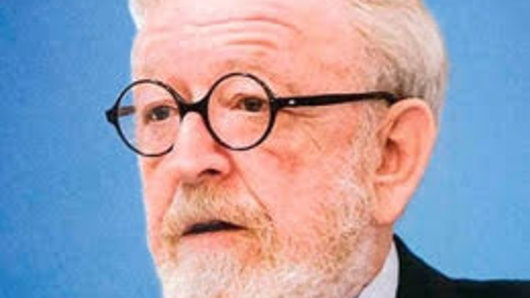
Robert Richter drew attention when he was representing the late Cardinal George Pell.Credit: Jason South
“I am post-Zionist,” Richter, who joined a group of 500 Jewish Australians this year to condemn a proposal by US President Donald Trump to forcibly transfer Gaza’s 2 million residents to Egypt and/or Jordan.
Born in 1946 in the Kyrgyz Republic of the former Soviet Union, Richter has lived a life shaped by displacement and scepticism of authority. His parents – Berek, a Polish Jew, and Sofia, a Ukrainian – met after being displaced during World War II. As an infant, Richter travelled with forged papers to Germany, where the family spent three years in a refugee camp before moving to Israel, one of the few places willing to accept them.
While he says he would accept a royal commission if recommended by the Richardson review, he draws a firm line at any inquiry tasked with defining antisemitism.
“That is the disputed arena,” Richter said.
He is particularly critical of the International Holocaust Remembrance Alliance (IHRA) definition of antisemitism, endorsed by the Albanese government on the recommendation of special envoy Jillian Segal, and 34 other countries. Richter describes the definition as “polluted”, arguing it impermissibly restricts political speech and criticism of Israel.
Many dispute this, pointing to the fact the definition is explicit that criticism of Israel similar to that levelled against any other country cannot be regarded as antisemitic.
Richter argues if an inquiry were to be held, it should examine hate speech and discrimination holistically – across race, religion, sex and ethnicity – rather than isolating antisemitism as a standalone category.
“If the report from Richardson tells us something we don’t know which is important and which must lead to a royal commission, then so be it,” he says.
Until then, one of Australia’s pre-eminent legal minds remains unmoved by the consensus around him.
Be the first to know when major news happens. Sign up for breaking news alerts on email or turn on notifications in the app.