Cracks in union code shine wider light on power push

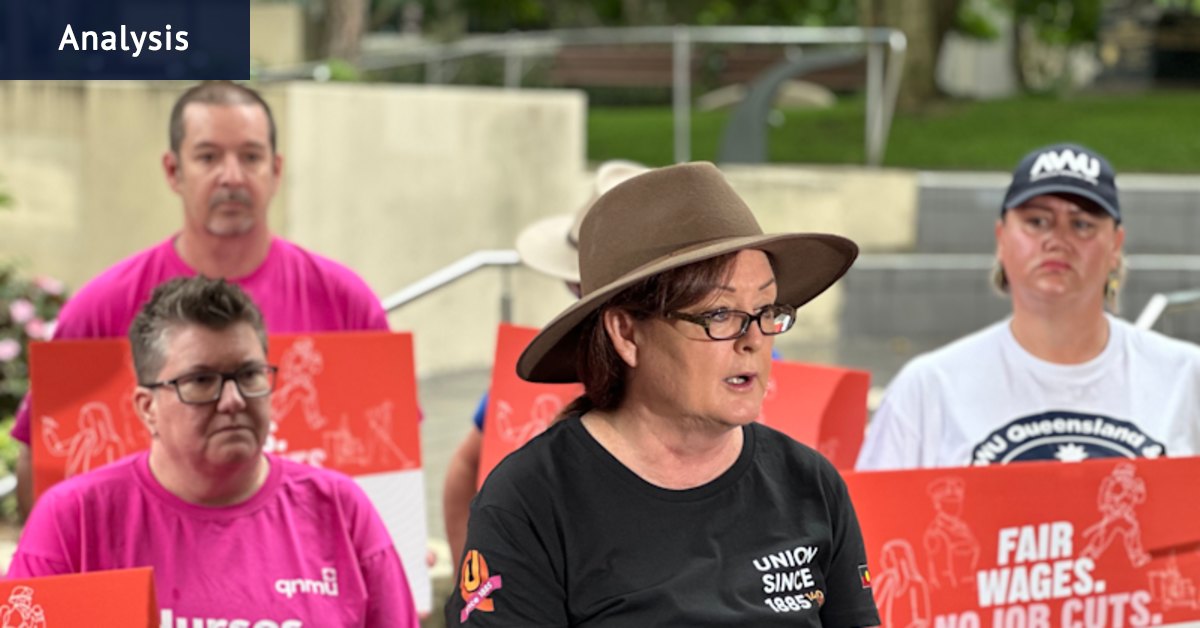
Under them, the almost 140-year-old union – of which she became the first woman to lead in 2022 – is the key civil construction player as it can represent most workers on those sites on its own.
Think horizontal, as she told the inquiry: roads and rail (above and below ground), power and water infrastructure. Some of the state’s biggest, often government-funded, projects.

Stacey Schinnerl breaks down describing an incident at Labour Day in 2023.Credit: Commission of Inquiry into the CFMEU
Large buildings and commercial towers, the vertical side of construction, are historically more CFMEU territory under that union’s narrower occupation-based membership coverage.
That former state CFMEU leaders Michael Ravbar and Jade Ingham pushed this boundary, and how, is the key thrust of Schinnerl’s concern. There’s much power, and member’s fees, at stake.
She believes the pair saw her election to the top role as an opportunity to apply enough pressure – personally and to her staff and members – that she would give in.
We’ve now heard much, through the two inquiry hearing blocks so far, July’s report into violence in the CFMEU, and beyond, about just how that pressure was applied.

Queensland Council of Unions leader Jacqueline King at Tuesday’s hearing.Credit: News Corp Australia
It took the form of violence, threats, intimidation and humiliation, amid a backdrop of accusations the AWU didn’t have the fight needed to back workers in such a dangerous industry.
Three major contractors tasked with completing the multibillion-dollar Cross River Rail project, Gold Coast Light Rail and Centenary Bridge upgrade have also been pulled into the story.
Either for giving in to the CFMEU or apparently declaring the ability for workers and their AWU representatives to access the sites through building union blockades wasn’t their problem.
That these and other disputes about lawful site entry were caught up in an arrangement which saw police, when called, deferring to the workplace regulator exacerbated the situation.

Former state CFMEU assistant secretary Jade Ingham, president Royce Kupsch, and secretary Michael Ravbar in 2020.Credit: Facebook/CFMEU
As did the fact the key contact, first revealed by this masthead, was a public servant under a corruption watchdog cloud and described as having a close personal a relationship with the former CFMEU president.
Not to mention the police agreement seemed to give a “do-around”, in Schinnerl’s words, for CFMEU officials without the necessary permits to get onto sites.
Let alone police were unable to take much action on anything if Schinnerl and others, “rightly or wrongly”, did not feel they could stand behind publicly formal complaints.
Loading
The second union leader called to the stand this week, Queensland Council of Unions general secretary Jacqueline King, spoke of CFMEU-led dysfunction in the regulator.
One of its short-lived former bosses was also seen as a potential weak point for the CFMEU, which almost turned her into a “captured pawn” before turning against her, too.
But the CFMEU’s former leadership also stands accused of using the development of government guidelines for best practice agreements with unions on major projects to push its agenda.
Schinnerl told the inquiry last week of her warnings about this to the office of then Labor premier Annastacia Palaszczuk, her cabinet ministers and senior public servants.
Loading
The former government is said to have cited legal advice backing their position, but also suggested they did not want to pick a side in union turf wars.
That the AWU is aligned with the minority Right faction of the Labor Party, while the CFMEU (at least historically) was aligned to the larger Left faction, is perhaps useful context here.
Another of King’s revelations was an approach by Ingham last year for her help to delay the passage of laws by the former Labor government seeking to close the entry permit loophole.
This came with a sweetener: it would help Ingham run against Ravbar for the top job and allow him to deliver the CFMEU back to the peak union council and Labor Left.
The alternative was a “nuclear” Ravbar. King knocked him back. Then came the federal government ordered administration of the union sparked by reporting from this masthead and 60 Minutes.
Since then, amid the pair’s only recently released grip, plans were also said to have emerged to use dual AWU members, and a $1 million fund, to take over their rival at a future election.
The inquiry last week flagged at least one matter which now might be referred to police. It had already heard of actions Ravbar and Ingham may be referred to authorities for, too.
The former leaders were heavily critical of the July report and denied its allegations. Both are expected to give evidence of their own to the inquiry.
What hasn’t yet been raised is the involvement of criminal-linked companies in the industry, as reported by this masthead, as part of a ploy by some AWU figures to outmuscle the CFMEU.
Whether all this and the suggested impact on the construction sector and wider economy may have been addressed sooner had Schinnerl spoken earlier, as she wondered this week, is hard to say.
But with a less-than-clear public hearing schedule planned from February, and a final report at this stage due before August, the $20 million inquiry now has much more to work with.
Start the day with a summary of the day’s most important and interesting stories, analysis and insights. Sign up for our Morning Edition newsletter.