Dead and Alive essays explore culture, politics and literature


ESSAYS
Dead and Alive
Zadie Smith
Hamish Hamilton, $36.99
Zadie Smith has written six novels, the first – White Teeth, published when she was in her early 20s, was an instant bestseller. The others received varying degrees of commercial and critical success. In time, she also followed suit with essays and short stories.
Dead and Alive is her fourth non-fiction work and displays the same erudition and elegance of her previous essays. These 30 contributions are wide-ranging, with tributes to writers including Martin Amis, Philip Roth, Hilary Mantel and Joan Didion, and excursions into book, art and film criticism. There’s also a love letter to New York, a rumination about the meaning of “agelessness” and ideas about the craft of writing. As with any random assortment of essays, some pieces will resonate with the reader more than others. If particular subjects don’t interest, Smith offers the gracious reminder in the foreword that “within the covers of this book, you have freedom of movement, and this freedom is absolute.
The collection opens with a couple of surveys into particular objets d’art, wherein Smith also riffs about the “pesky white male gaze”, exoticisation, fetishisation and the Eurocentric view. She then does a deep dive into the Tár movie (2022), starring Cate Blanchett as a conductor, who also happens to be in crisis and “the least fashionable [one] on earth: the midlife kind”. As a fellow Gen Xer (Smith is 50), her take on the Tár character is both empathetic and excoriating: “The old are vampiric. The old hoard resources. They use status and power and youth itself to distract themselves from the inevitable,” but then another salvo to ponder: “Why do female ambition and desire have to be so monstrous?”
With her astute eye and wry commentary, Smith is as nimble a visual arts and movie critic as she is a literary one.
One of the highlights of Dead and Alive is a nuanced take on representation in fiction. Instead of the troubling “cultural appropriation” term, what if, she posits, we think of it as “interpersonal voyeurism” or “profound other-fascination”. It may prove provocative to some readers, but Smith does not believe in the notion “that we can and should write only about people who are fundamentally ‘like’ us: racially, sexually, genetically, nationally, politically, personally”. She’d never have written any of her books if she’d held firm to that dogma, she points out. After all, storytelling is an invitation to inhabit a hypothetical space “in which you have imagined access to whatever is not you”. In the end, surely it’s up to the reader to decide on the plausibility of the characters presented before them.

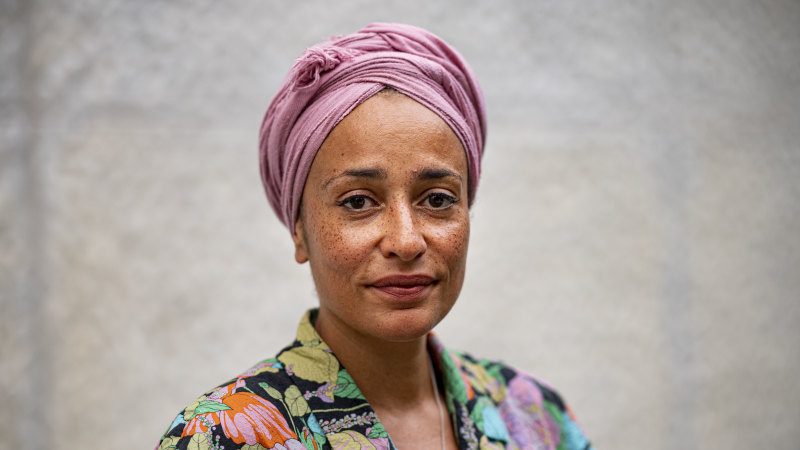
Smith is as fine an essayist as she is a novelist.Credit: Getty
Given the author’s Jamaican-English heritage, it’s not surprising that there are essays about race: a survey of a book about Black England, a foreword to a study of African American culture in New York and an insight into black freedom of expression as seen through the work of artist Kara Walker. But Smith is also politically expansive, with contributions on Trump, Gaza and the 2024 British and American elections.
Elsewhere, there is a series of obituaries that are lively and entertaining snapshots of various influential men and women of letters. She may not agree with various aspects of Amis’, Roth’s or Morrison’s oeuvre or personal beliefs, but Smith opines, “Whenever I consider the very many writers who have left their mark on my own writing in one way or another, I am reminded you do not need to be perfectly aligned with somebody to be in their debt…”