Council’s investment in beauty is a joy to behold

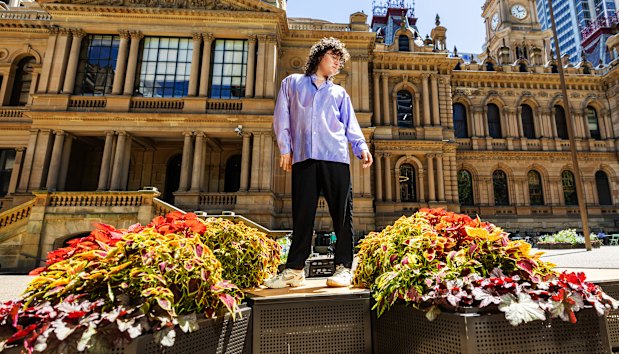
The trouble with assessing the true value of planter boxes across the City of Sydney is that you’re trying to measure the monetary value of aesthetics (“Row over Sydney council’s $20m planter boxes”’, November 27). The program cost of $19.6 million sounds like a lot, but this is a small fraction of the council’s total budget. Now consider the city without these boxes, which are located where conditions do not allow permanent plants to grow. How do you measure joy? The alternative is an environment of concrete, with no colour or living thing? Is that what critics want? Larry Woldenberg, Forest Lodge

Planter boxes outside the Town Hall.Credit: David Barwell
Flabbergasted hardly describes my horror at the city council awarding a $20 million contract for flowers while the number of homeless people sleeping in nooks and crannies grows by the day (“Council flower power spend emits a bad bouquet”, November 27). The councillors who voted to accept this contract no doubt go home to a warm bed every night. They should be thoroughly ashamed. Denis Suttling, Newport Beach
While beatifying city streets is a good idea, expensive flower boxes are not the answer, especially if they are filled with exotic plants. They barely contribute to cooling or carbon reduction. Large native trees, including our magnificent figs, which require little maintenance, could be planted near Town Hall, at Customs House and other public areas desperately in need of shade as our summers get hotter. Jill Stephenson, Woolwich
While I can sympathise with the City of Sydney’s bean counters, I do love those delightful planter boxes in the city. But let’s think again: how about a dedicated City of Sydney landscaping department? Cheaper, by far, one would imagine, than contracting the folk in Melbourne. Alternatively, Sydney is host to any number of excellent professional landscapers and horticulturists. Give them the work, for Pete’s sake. Anna Roache, Granville
As a Potts Point resident, I beg to differ with Patrick McGrath, who wants the plane trees removed from the city (Letters, November 27). It is for only two months of the year that we are affected by pollen from these trees, not year-round, and wearing a face mask during this time could alleviate his problem. A small price to pay for such a glorious streetscape. Susanne Kirby, Potts Point
In times of fiscal tightening, it is always tempting for politicians to frame beauty as optional – gardens, public art, attractive streetscapes and human-centred design. But as French playwright Victor Hugo reminded us in Les Miserables: “The beautiful is as useful as the useful. More so, perhaps.” John Berry, Cammeray
Price is right
Yes Jenna Price, ABC Sydney has become a pseudo-commercial radio station, where long-time listeners like me are asked to ring in about something silly and trivial, or to win a prize other than an ABC tea towel or mug (“Suddenly it’s blokes akimbo on ABC radio. Loyal female listeners are noticing”, November 27). These days it all sounds like triple something, not the 702 of old. Agreed, Hamish for breakfast and Craig for James’ old slot (oh, we miss you, Mr Valentine). Thomas Oriti is a good choice, but a microphone dominated by blokes is just wrong. Bring back Sarah Macdonald before I become another greying old woman singing the words to songs that used to be left to my 19-year-old son. Lisa Williams, Dulwich Hill

Bring back Sarah Macdonald, says Lisa Williams.
Jenna Price’s piece reminded me of the ABC Local radio’s penchant for shooting itself in the foot. Sally Loane was sacked from the Sydney morning slot because her ratings had dropped a bit. Deborah Cameron was brought in and ratings nosedived and stayed low with her replacement Linda Mottram. Wendy Harmer replaced her, the ratings went up, the audience was rebuilding, and then some bright spark decided to throw the whole thing in the air and let the chips fall where they may. Red Symons left his morning slot in Melbourne and was replaced with two novices. Ratings tanked. In Sydney, there was a shotgun marriage between Robbie Buck and Wendy Harmer and breakfast was extended to 10am, with Cassie McCullagh to fill the gap between 10am and Conversations at 11am. This lasted two years, and it was back to sensible programming. Clearly the
lesson “if it ain’t broke don’t fix it” has never sunk in. Nicholas Triggs, Katoomba
Apart from blokes taking over the ABC, the organisation has an uncanny knack for derailing what’s working well. Take Q+A: once a strong program, it was shuffled between hosts, bounced from Monday to Thursday and back again, and ultimately consigned to the scrap heap. Another example is sacking Sarah Macdonald, one of their finest presenters. Commercial media managers are running the show, but understanding ABC audiences is a unique skill that requires putting program quality before ratings. This will never change. If the ABC understands this, it will continue to be a respected organisation. Otherwise, it will become a low-level commercial organisation, which is the way things are going. Mukul Desai, Hunters Hill
Jenna Price writes “the ABC audience and the 2GB audience could not be more different”. I listen to both the ABC and 2GB to get opposing views, enabling me to evaluate issues having heard both sides. Alan Slade, Dover Heights
As a former ardent and loyal listener of ABC Radio Sydney, I wholeheartedly agree with Jenna Price and especially her recommendations. The station has literally and metaphorically lost sight of the city it is supposed to be covering. Peter Neufeld, Mosman
Bushfire science
The science about bushfires and disturbances including logging is rather less settled than Professor David Lindenmayer suggests (“Logged forests a bigger fire risk than the koala park”, November 25). Comparisons are confounded by variation in terrain and weather, among other factors. The most thorough analysis of the impacts of logging on the severity of the Black Summer fires of 2019-20, led by Professor David Bowman of the University of Tasmania, found no difference between national parks and state forests. Fire occurs more frequently in native forests than plantations, as the Cambridge study found, because the former are much more extensive and the latter are more concentrated assets with much greater investments in protection. The risks and costs of plantation loss can be much higher than for native forests; ask the Tumut region businesses and supply chains about the impacts of the Black Summer fires, in which a third of that region’s plantations were lost. Future management of our native forests, including those in national parks, should be better informed by history: native forests pre-1788 were not “unmanaged” but actively managed by their traditional owners through the sophisticated use of fire. Declaring a national park does not inherently reduce bushfire risk. Peter Kanowski, Professor of Forestry (ANU)

Climate scientists say global warming means severe bushfires will become more frequent in Australia.Credit: Nine News
Economy for Earthlings
Correspondent Margaret Turner says it “shouldn’t be controversial to say that environmental goals have to be balanced with affordability, energy security and a strong resources sector” (Letters, November 27). This opinion is misguided. According to every credible climate scientist on Earth, unless we drastically reduce fossil fuel use and CO2 emissions within a rapidly closing time frame, we won’t have a future – let alone a viable economy – as the immutable laws of physics won’t disappear due to repeated fossil fuel-funded fairy tales. Perhaps if “mum and dad investors” like Ms Turner thought more about the long-term future for their children, rather than short-term dividends for themselves, then all of humanity could prosper. With the future so tenuous, it’s little wonder that so many people are choosing not to have children. There is no economy on a dead planet, and the switch to net zero is not optional. I’m not sure how that message can be made any clearer. Chris Roylance, Paddington
A message to pollies
What a wonderful interview and life story of former Liberal MP Katie Allen (“How Katie Allen’s daughter recognised her worst fear”, November 27). Such bravery, compassion and dedication to public service despite her personal health issues. Here is the exemplar of carpe diem and a life well lived, and for politicians, to remember they are representatives of their electorate, not their party. There is also a message for the LNP, where they may have lost their way. They need more Katie Allens. Rowan Godwin, Rozelle

Credit: Cathy Wilcox
Heads in the sand
The federal Coalition, while seeking to reduce household costs on the one hand and rejecting net zero on the other, must acknowledge irrefutable science. Atmospheric physics links global warming to the growing intensity of storms and their resultant damage (“Man dead, commuter chaos, thousands without power after severe storms”, November 27). Quite apart from the cost to the community of repairing infrastructure damage, the significantly increasing insurance premiums will further burden family budgets. It is unconscionable that the Coalition is supporting additional fossil fuel-generated power. However, it is just as unacceptable that our national government continues to support the growth in exports of coal and gas. It is, after all, growth of carbon emissions on a global scale that is the problem. Roger Epps, Armidale
Honest day’s work
Early in my working life, when my payslip indicated I had been overpaid by a government agency, I immediately reported it to my employer, believing that it would have been morally and possibly criminally wrong to keep the overpayment. Surely a significant number of the 500 public servants who were overpaid did realise the same, and should have reported and forgone their overpayments “(NSW paid staff for years after leaving, audit”, November 27). John Payne, Kelso
Masters of the AI universe
Stewart Fist is correct in saying AI creates no new knowledge – so far (Letters, November 26). But what is certain is that AI cannot exist without the human creations of the internet and electricity supply, and it certainly cannot access the repositories of human knowledge in the great libraries of the world such as Trinity College, unless of course it’s all been digitised – by humans. Peter Thornton, Killara
Biting inflation
Jim Chalmers is in a world of pain as inflation bites (“Inflation rise means it may be a rate hike before a cut”, November 27). When are we going to deal with the elephant in the room – the NDIS? It’s approaching $58 billion for 751,000 participants. That’s bigger than the cost of the government pension, which benefits 2.56 million Australians. Every second shop opening is an NDIS provider. The cost of getting a cleaner, a driver or a person to take you to the shops is now ridiculously high. Let’s end the rorting, Mr Chalmers, or give the NDIS to someone else to administer it. Brian Barrett, Padstow
Our various governments ought to know that the price of electricity is the price charged by suppliers, regardless of who pays for it. Their concern for the poverty-stricken is commendable, but trying to address that by subsidising electricity for all was just about the worst possible policy response. Apart from dulling the appropriate responses by consumers to price signals, billions of dollars have been handed to those who don’t need help. Helping those in need is best handled directly. Lowering their taxes and boosting unemployment relief would be a better approach. In an inflationary environment, expenditure savings elsewhere and/or a tilting of the whole tax scale would be appropriate. Is there a Labor government in the house? Mike Bush, Port Macquarie
First crime
As we concentrate on the scourge of domestic violence this week, it is worth remembering that the first public flogging in Australia was for a case of domestic violence (“Thousands show support for ending family violence at silent rally”, November 25). The marine Thomas Bramwell was sentenced to 200 lashes (reduced to 100) for beating convict Elizabeth Needham, whom he had “looked after” on the First Fleet ship Lady Penrhyn, and who had refused to “go into the bush” with him. What do we learn from this, that the first punishment was on an authority figure for a crime against a vulnerable person, who was both a convict and a woman? Rob Ferguson, St Ives
For Kiwi and country
Thank you to Shane Wright for the enlightening piece on Kiwis making Australia home (“In the game that really matters, Australia is smashing NZ”, November 27), even though he failed to reference the great Fred Hollows in his brief pantheon of New Zealanders we claim as our own, and neglected the dark side of the migration, exemplified by a certain former premier of Queensland. John Balazs, Randwick

Groundbreaking eye specialist Fred Hollows. Credit: Robert Pearce
Your article on Kiwi migration brought to mind a comment by a New Zealand politician when asked for his opinion on his citizens migrating to Australia. “I think it’s a great idea – it would undoubtably raise the IQs of both countries.” Duncan McRobert, Hawks Nest
Talking turkey
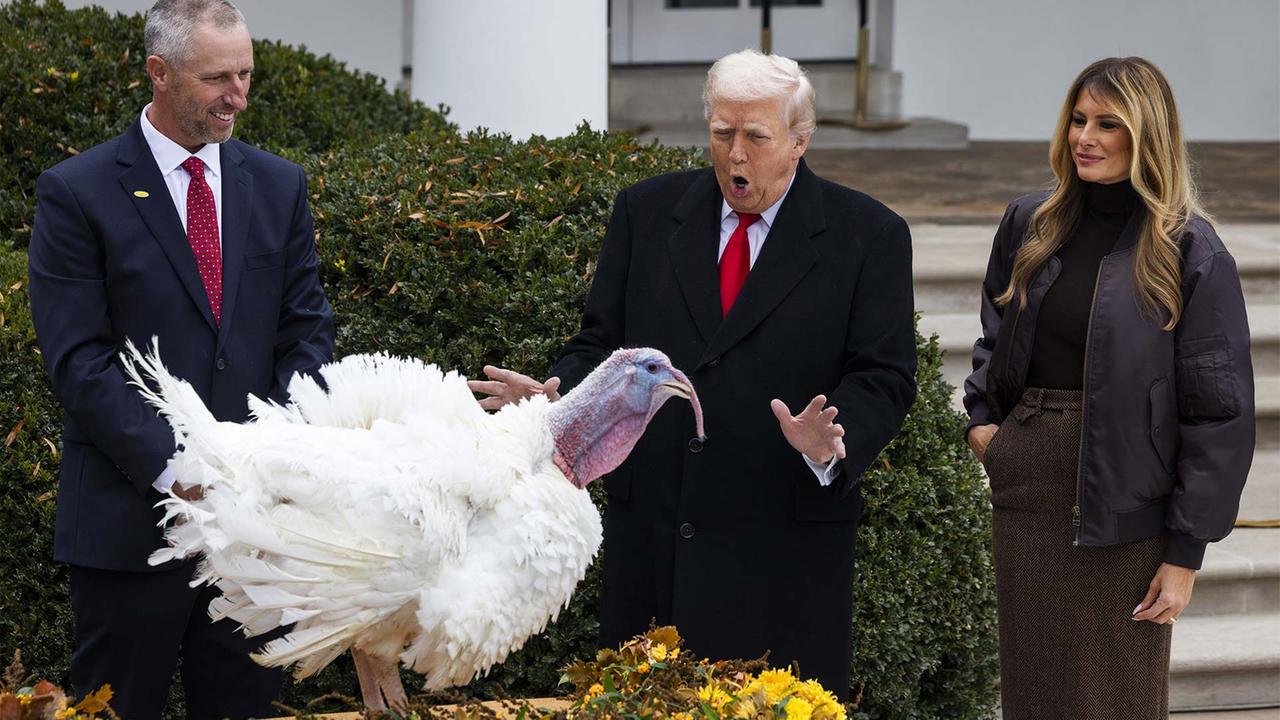
Sorry, Viv Munster (Letters, November 27), there are a lot more than one turkey in the White House, and none of them have feathers. There’s the Vice Turkey, the RFK Turkey, the Secretary of State Turkey, to name just a few. Richard Grant, St Leonards
While pardoning a turkey, Trump revealed he actually has a speechwriter. Now that’s who needs a pardon. Paul McShane, Burradoo
That’s not the first turkey that Trump has pardoned. However, unless it also talks turkey it may be the one least likely to wreak more havoc. Lyn Savage, Coogee
- To submit a letter to the Sydney Morning Herald, email letters@smh.com.au. Click here for tips on how to submit letters.
- The Opinion newsletter is a weekly wrap of views that will challenge, champion and inform. Sign up here.