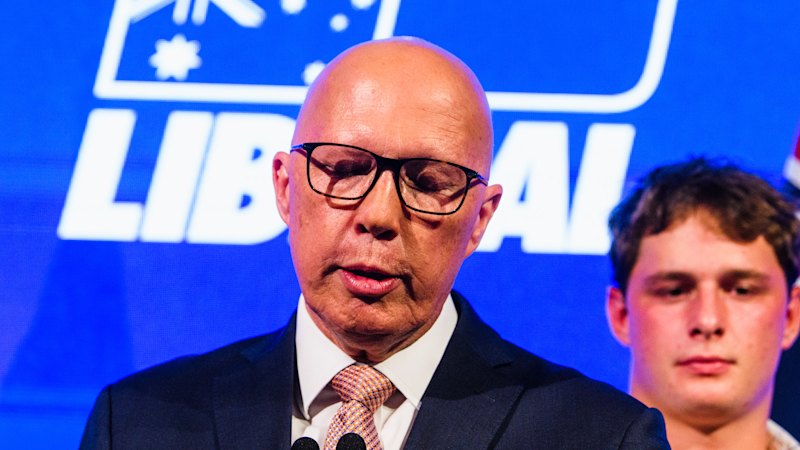
Least popular leader in decades, Australian Election Study reveals

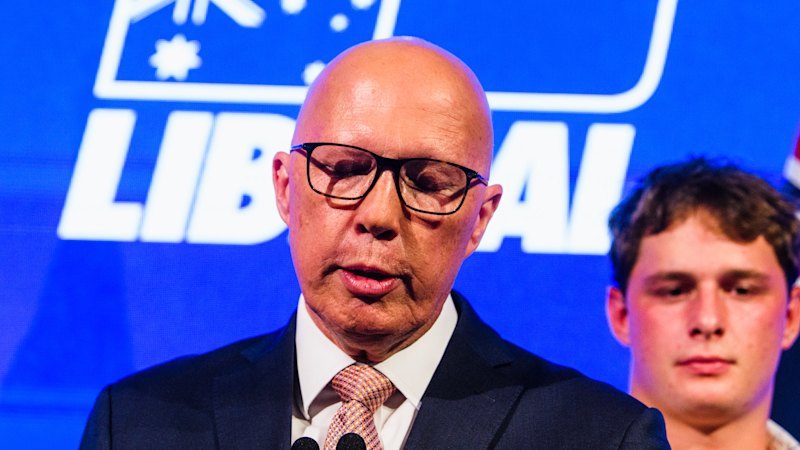
That included Dutton accusing Albanese of “not being able to lie straight in bed” during the third election debate of the campaign. But just 8 per cent of people surveyed for the study believed Dutton won the debates, the lowest success rate in the study’s history.
Report co-author Ian McAllister said his record-low popularity was a key factor in the election result.
“In an environment where political leaders are increasingly important electorally, Peter Dutton’s lack of popularity among voters broke several records,” he said.
Among women, support for the Coalition nosedived to record lows. Just 28 per cent of women backed the Coalition, compared to 37 per cent of men. As recently as 2013, there was only a small gender gap among Coalition voters.
Women have moved to Labor, with 36 per cent of women backing Albanese compared to 31 per cent of men. Women were also much more likely to support the Greens, 18 per cent compared to 8 per cent of men, while voting for other parties was 18 per cent for women and 25 per cent for men.
Co-author Sarah Cameron from Griffith University said the wide gender gap that emerged over the past decade has persisted.
Loading
“The Coalition attracted the lowest share of votes from women on record,” she said. “Conversely, Labor attracts more votes from women than men. The gender gap in voting for Labor, at five per cent, is about half the size of the Coalition’s.”
The Coalition has long enjoyed an advantage over Labor as the party believed to be the better economic manager.
That advantage ended this election, with Labor holding a four-point lead. At the 2016 election, the Coalition had a 27-point lead over Labor on economic management.
The Coalition is seeking to rebuild its economic credentials, with shadow treasurer Ted O’Brien to use a major address to the National Press Club on Wednesday to set key markers of the opposition’s approach to the budget and economy.
O’Brien will argue that the budget is increasingly reliant on income taxes. The budget will only return to surplus by the middle of next decade because of a near-$500 billion increase in personal income taxes.
If income tax as a share of GDP remained at current levels, the budget deficit would climb from 1.5 per cent to 2.1 per cent.
“Debt wouldn’t stabilise – it would keep growing without limit. It’s clear Labor’s plan is to paper over its growing deficits by letting personal income taxes rip even faster,” he will say.
O’Brien will argue that the improvement in the budget was only due to high inflation, record corporate tax revenues and a surge in personal income tax collections.